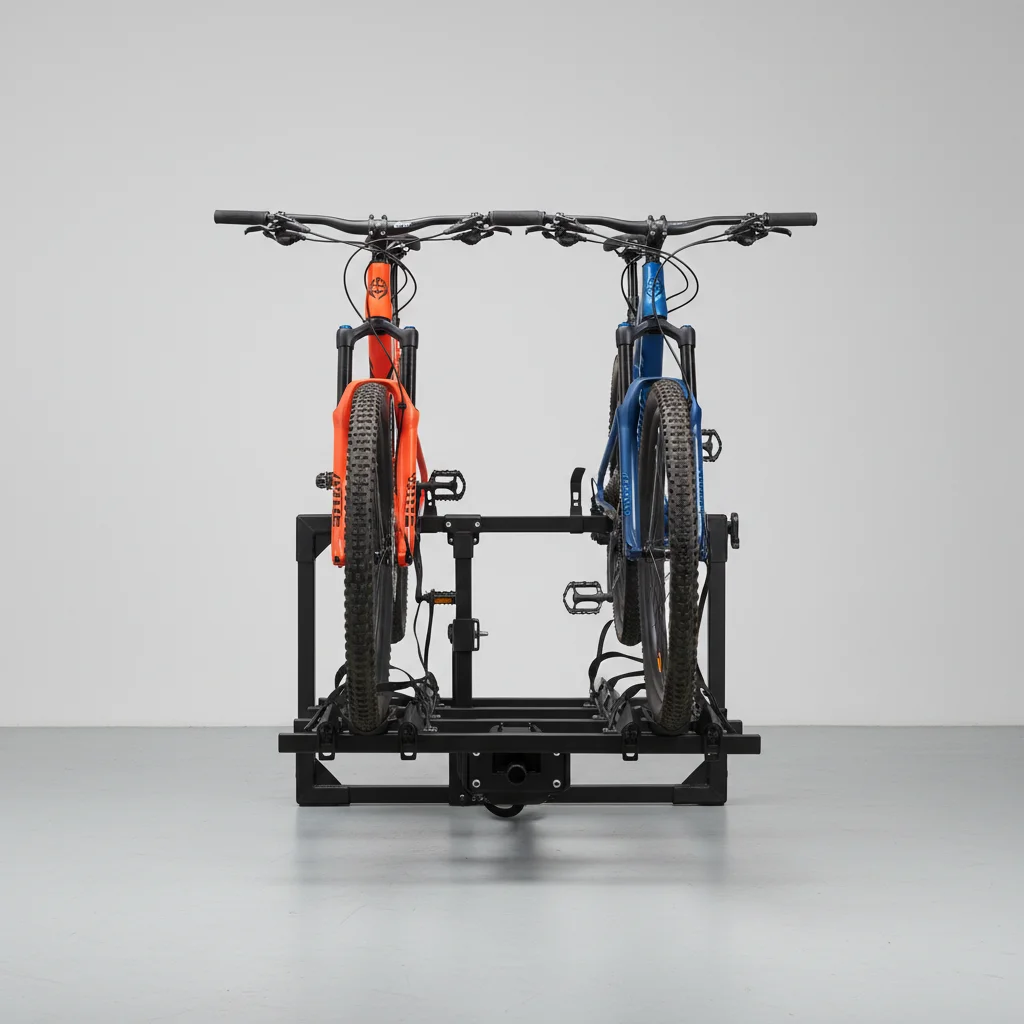
When selecting a hitch bike rack for your truck, understanding the specific considerations for truck beds and tailgates is crucial. Unlike cars or SUVs, trucks offer unique challenges and advantages, primarily related to bed access and ground clearance. This guide will detail the essential factors to consider, ensuring you choose a rack that integrates seamlessly with your truck’s functionality and keeps your bikes secure.
Understanding Truck Bed Access with a Hitch Rack
One of the primary concerns for truck owners is maintaining access to the truck bed. Many standard hitch bike racks can obstruct the tailgate, making it difficult to load and unload gear or access tools. Swing-away hitch racks are an excellent solution for this, as they pivot away from the vehicle, allowing full tailgate access even with bikes loaded. Another option is a vertical hitch rack, which often positions bikes higher, potentially clearing the tailgate on some truck models.
Ground Clearance and Departure Angle Considerations
Trucks, especially those used for off-roading or with lifted suspensions, have different ground clearance and departure angle requirements than other vehicles. A hitch bike rack that extends too far rearward or hangs too low can scrape on inclines, speed bumps, or uneven terrain. Look for racks with a higher rise shank or those designed specifically for trucks and RVs, which often feature enhanced ground clearance. This is particularly important for trucks with longer overhangs.
- Consider a swing-away rack for full tailgate access.
- Prioritize racks with a high rise shank for improved ground clearance.
- Ensure the rack’s design doesn’t interfere with your truck’s departure angle.
- Check for anti-wobble features to maintain stability on rough roads.
- Verify the rack’s weight capacity matches your bike type and quantity.
Weight Capacity and Bike Compatibility for Trucks
|
Our Picks for the Best Bike Rack in 2026
As an Amazon Associate I earn from qualifying purchases.
|
||
| Num | Product | Action |
|---|---|---|
| 1 | CyclingDeal Upright Bike Stand Floor - Vertical & Horizontal Bicycle Stand Bicycle Storage - Safe & Secure Bike Storage Rack - for Wheels Sizes up to 29" - Bike Rack Garage Bicycle Rack - Classic |

|
| 2 | monTEK Swivel Bike Wall Mount, Bike Hangers for Garage, Space-Saving Vertical Bike Rack, Sturdy Bike Storage Rack Holds Up to 66lbs, Easy to Install, 4 Pack |
|
| 3 | 2 Bikes Floor Stand,Adjustable Bicycle Parking Rack with Hook for Garage/Indoor/Outdoor,Metal Cycle Storage Organizer Rack for Road Bikes |
|
| 4 | Allen Sports Deluxe 4-Bike Hitch Mount Rack (2-Inch Receiver) , Black |
|
| 5 | KUAT Sherpa 2.0 Durable Lightweight Aluminum Compact 2 Bike Transporting Hitch Rack with Cable Lock & Foldable Tire Cradles | Capacity - 40 Lbs per Tray |
|
| 6 | Young Bike Rack Hitch for Car - 200LB 2-Bike Rack Hitch Mount Platform Style Hitch Bike Rack,Smart Tilting & Easy Fold for Car SUV with 2 Inch Receiver,Bike Carrier Fits Up to 5-inch Fat Tire |
|
| 7 | CHEPARK Bike Floor Stand Rack- Indoor Bike Stand for Garage/Home - Bike Storage Bicycle Parking Rack Fit 20”-29” Mountain Road Bikes (1 Bike Rack) |
|
| 8 | Vertical Bike Stand, Upright Bike Parking Rack Floor, Adjustable Bicycle Storage for Wheels Sizes up to 29", Freestanding Bicycle Organizer with Swivel Casters, Indoor Bike Holder for Garage 2-Pack |
|
| 9 | Vertical Bike Stand, Freestanding Bike Rack Garage Storage Upright Bicycle Floor Stand Indoor Bike Holder with Adjustable Height for Garage & Apartment - for Wheels Sizes up to 29” |
|
| 10 | Vertical Bike Parking Stand - Adjustable Height for 29"Wheels, Space-Saving & Freestanding Bike Rack for MTB/Road Bikes,No-Drill Installation Indoor Bike Storage for Apartments & Garages |
|
Truck owners often carry heavier bikes, such as electric bikes or mountain bikes, and sometimes multiple bikes. It’s imperative to check the hitch bike rack’s weight capacity and ensure it can safely support the total weight of your bikes. Additionally, consider the type of bikes you’ll be transporting. Some racks are better suited for specific frame types or wheel sizes. Platform-style racks are generally more stable and easier to load for heavier bikes.
Always consult your truck’s owner’s manual for its specific hitch receiver class and tongue weight capacity. Overloading your hitch can be dangerous and lead to damage to both your vehicle and the bike rack.
Installation and Security Features
Installing a hitch bike rack on a truck is generally straightforward, but ensuring a secure fit is paramount. Look for racks with integrated anti-wobble systems that minimize movement during transit. Security features, such as integrated cable locks or locking hitch pins, are also vital to protect your investment. Given the higher profile of trucks, ensuring bikes are securely fastened and visible is important for road safety.
Some racks offer quick-release mechanisms for easy removal when not in use, which can be convenient for truck owners who frequently use their bed for other purposes. Always double-check all straps and fasteners before driving.
Choosing the Right Material and Durability
Given that trucks are often used in more demanding environments, the material and durability of your hitch bike rack are important. Steel racks are generally more robust and can handle heavier loads, but they are also heavier. Aluminum racks are lighter, making them easier to install and remove, but may have lower weight capacities. Consider racks with powder-coated finishes for enhanced corrosion resistance, especially if you live in an area with harsh weather conditions or frequently drive on unpaved roads.

I’ve been struggling with tailgate access on my F-150 for ages with my old rack. The mention of swing-away hitch racks in the guide was a game-changer. I picked up a Kuat Pivot and it’s exactly what I needed. Now I can get into my truck bed without having to unload all the bikes. Highly recommend looking into those if you have a truck!
This guide was super helpful for understanding the ground clearance issue. I drive a lifted Tacoma and was worried about my bikes dragging. I ended up going with a vertical hitch rack like suggested, and it keeps my mountain bikes well clear of the ground, even on rougher roads. It’s a bit pricier but worth it for the peace of mind.
I appreciate the info on truck bed access, but I found that even with a swing-away, it’s still a bit of a hassle to get into the very back of my long bed. It’s better than nothing, but not as seamless as I hoped. The installation was also a little more involved than I expected for my specific truck model. Still, it’s a solid rack once it’s on.
Finally, a guide that actually addresses truck-specific challenges! I was about to buy a standard rack and would have been so frustrated with my Silverado’s tailgate. The breakdown of different rack types, especially the vertical option, made my decision much easier. My bikes feel super secure, and I don’t have to worry about them at all.