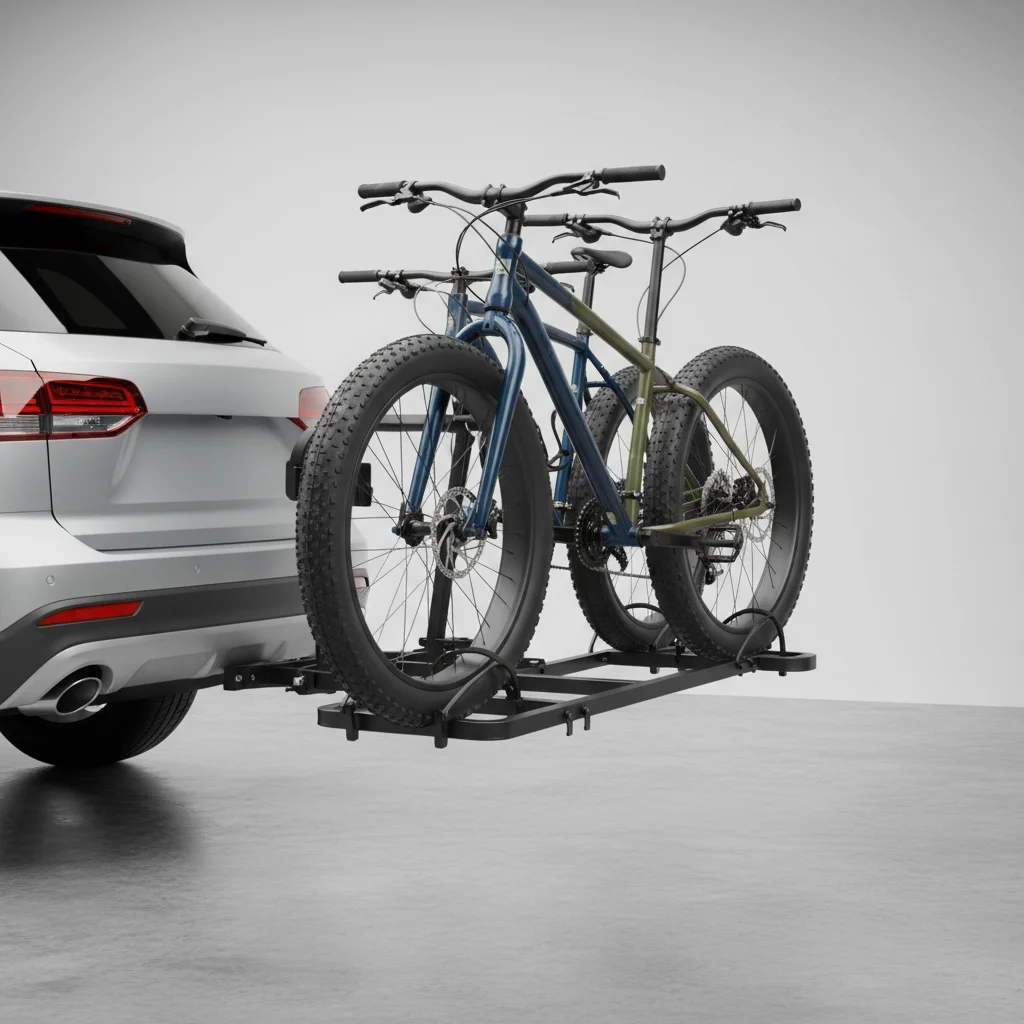
When selecting a hitch bike rack for fat tire bikes, it’s crucial to consider three primary factors: cradle width, weight capacity, and wheel strap length. Fat tire bikes, with their oversized tires typically ranging from 3.8 to 5 inches wide, require specialized racks that can accommodate these dimensions without causing damage or instability during transport. Standard bike racks often have cradles or wheel trays designed for narrower road or mountain bike tires, making them unsuitable for the wider profile of fat tire bikes.
The first critical aspect is the cradle width or wheel tray design. Many conventional hitch racks feature wheel trays that are only 2-3 inches wide, which will not securely hold a fat tire. Look for racks specifically advertised as ‘fat tire compatible’ or those that offer optional fat tire adapters. These adapters typically widen the existing wheel trays or provide larger, more accommodating cradles. For instance, some platform-style racks come with adjustable wheel cradles that can expand to over 5 inches, ensuring a snug and stable fit for your bike’s tires.
Understanding Weight Capacity for Fat Tire Bikes
Fat tire bikes are generally heavier than their standard counterparts, often weighing between 30 to 50 pounds, and electric fat tire bikes can exceed 70 pounds. Therefore, the weight capacity of your hitch bike rack is paramount. Always check the rack’s per-bike weight limit and its total weight capacity. A rack designed for two standard bikes might have a total capacity of 80 pounds, but if each bike is 40 pounds, it might struggle with two heavier fat tire bikes. Ensure the rack can comfortably support the combined weight of all the fat tire bikes you intend to transport.
Many heavy-duty platform racks are built to handle the increased weight of fat tire and electric bikes. These often feature robust steel construction and secure attachment points. It’s also important to consider the tongue weight capacity of your vehicle’s hitch receiver, as this will ultimately dictate the maximum weight your vehicle can safely carry on a hitch-mounted accessory. Consult your vehicle’s owner’s manual for this specification.
Wheel Strap Length and Security
|
Our Picks for the Best Bike Rack in 2026
As an Amazon Associate I earn from qualifying purchases.
|
||
| Num | Product | Action |
|---|---|---|
| 1 | 2 Bikes Floor Stand,Adjustable Bicycle Parking Rack with Hook for Garage/Indoor/Outdoor,Metal Cycle Storage Organizer Rack for Road Bikes |

|
| 2 | CyclingDeal Upright Bike Stand Floor - Vertical & Horizontal Bicycle Stand Bicycle Storage - Safe & Secure Bike Storage Rack - for Wheels Sizes up to 29" - Bike Rack Garage Bicycle Rack - Classic |
|
| 3 | CHEPARK Bike Floor Stand Rack- Indoor Bike Stand for Garage/Home - Bike Storage Bicycle Parking Rack Fit 20”-29” Mountain Road Bikes (1 Bike Rack) |
|
| 4 | Vertical Bike Parking Stand - Adjustable Height for 29"Wheels, Space-Saving & Freestanding Bike Rack for MTB/Road Bikes,No-Drill Installation Indoor Bike Storage for Apartments & Garages |
|
| 5 | Vertical Bike Stand, Upright Bike Parking Rack Floor, Adjustable Bicycle Storage for Wheels Sizes up to 29", Freestanding Bicycle Organizer with Swivel Casters, Indoor Bike Holder for Garage 2-Pack |
|
| 6 | Young Bike Rack Hitch for Car - 200LB 2-Bike Rack Hitch Mount Platform Style Hitch Bike Rack,Smart Tilting & Easy Fold for Car SUV with 2 Inch Receiver,Bike Carrier Fits Up to 5-inch Fat Tire |
|
| 7 | Vertical Bike Stand, Freestanding Bike Rack Garage Storage Upright Bicycle Floor Stand Indoor Bike Holder with Adjustable Height for Garage & Apartment - for Wheels Sizes up to 29” |
|
| 8 | monTEK Swivel Bike Wall Mount, Bike Hangers for Garage, Space-Saving Vertical Bike Rack, Sturdy Bike Storage Rack Holds Up to 66lbs, Easy to Install, 4 Pack |
|
| 9 | Allen Sports Deluxe 4-Bike Hitch Mount Rack (2-Inch Receiver) , Black |
|
| 10 | KUAT Sherpa 2.0 Durable Lightweight Aluminum Compact 2 Bike Transporting Hitch Rack with Cable Lock & Foldable Tire Cradles | Capacity - 40 Lbs per Tray |
|
Standard wheel straps on many bike racks are designed for narrower rims and tires, making them too short to wrap around a fat tire. When purchasing a hitch bike rack for fat tire bikes, verify that it includes extended wheel straps or that longer straps are available as an accessory. These longer straps are essential for securely fastening the wheels to the rack, preventing movement and potential damage during transit.
Beyond strap length, consider the overall security features. Look for integrated cable locks or the ability to add your own locking mechanisms to deter theft. Some premium racks offer integrated locking systems that secure both the bikes to the rack and the rack to the vehicle’s hitch receiver. This multi-layered security is particularly important given the higher cost of many fat tire bikes.
Platform vs. Hanging Style Racks for Fat Tire Bikes
For fat tire bikes, platform-style hitch racks are almost always the superior choice over hanging-style racks. Hanging racks typically support bikes by their top tubes, which can be problematic for fat tire bikes due to their often unique frame geometries and the risk of frame damage. More importantly, hanging racks do not provide the necessary wheel support for wide tires, leading to instability and potential contact between bikes or with the vehicle.
Platform racks, on the other hand, support bikes by their wheels, cradling them securely and providing excellent stability. This design minimizes frame contact and is ideal for bikes with delicate finishes or unique frame shapes. Many platform racks also feature adjustable wheel trays and robust arm clamps that can accommodate various bike sizes and tire widths, making them highly versatile for fat tire bikes.
Key Features to Look For
- Adjustable wheel trays that expand to 5 inches or more.
- High per-bike weight capacity (at least 50-75 lbs per bike).
- Extended wheel straps for secure tire fastening.
- Robust construction, often steel, for durability.
- Integrated locking mechanisms for security.
Choosing the right hitch bike rack for your fat tire bike ensures safe and worry-free transportation. Prioritize racks that explicitly state fat tire compatibility, offer ample weight capacity, and provide secure wheel fastening. Investing in a quality rack designed for these specific bikes will protect your valuable equipment and enhance your cycling adventures.Always double-check all connections and straps before each journey to ensure maximum safety and stability.
