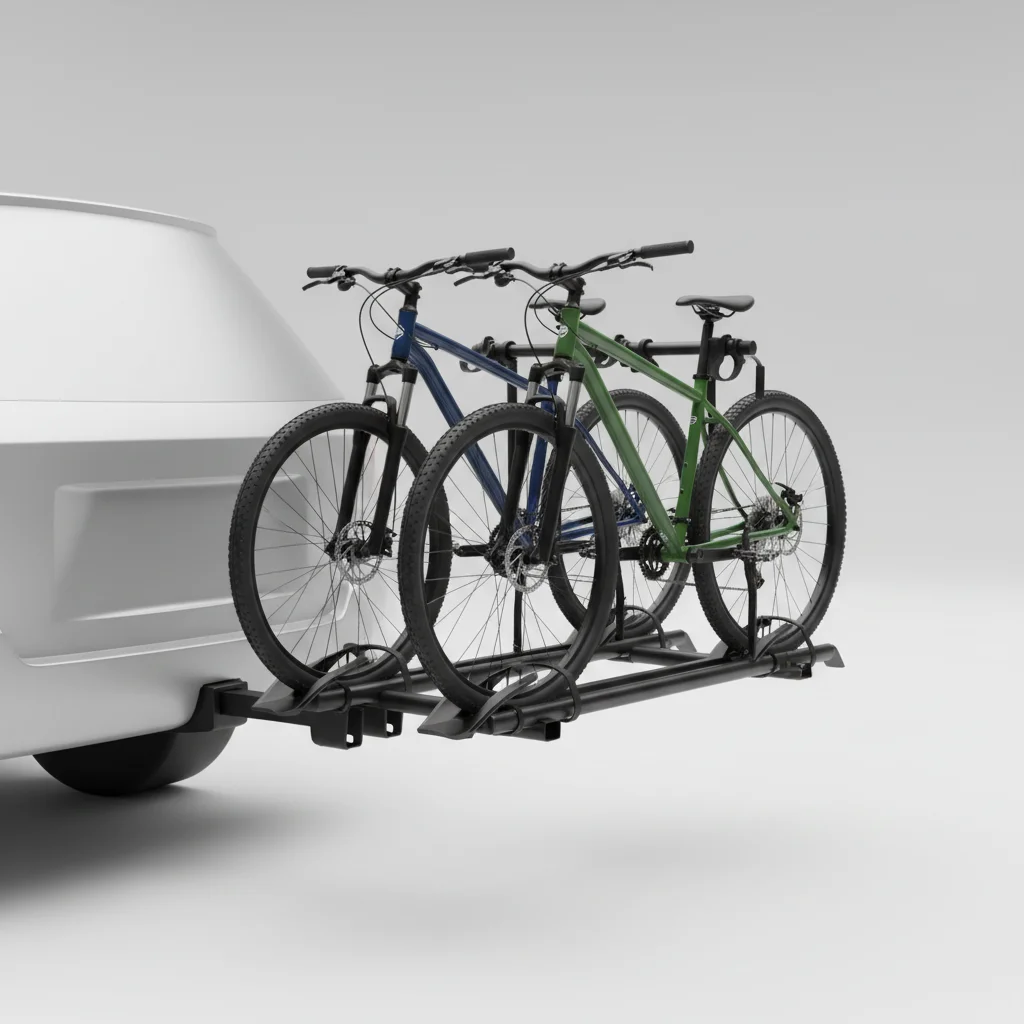
Choosing the right hitch bike rack for your car involves understanding several key factors, including your vehicle’s hitch class, the number of bikes you plan to carry, and the specific features that enhance ease of use and security. There are typically three main types of hitch bike racks suitable for cars: platform, hanging, and vertical racks, each offering distinct advantages depending on your needs.
Understanding Your Car’s Hitch Class
Before selecting a hitch bike rack, it’s crucial to identify the class of your car’s trailer hitch. Hitches are categorized into classes I through V, with classes I and II being most common for passenger cars and smaller SUVs. A Class I hitch typically has a 1.25-inch receiver opening and a weight capacity of up to 200 pounds tongue weight, suitable for carrying one or two bikes. Class II hitches also often feature a 1.25-inch receiver but offer a higher tongue weight capacity, usually up to 350 pounds, allowing for two to three bikes. Using a rack that exceeds your hitch’s capacity can be dangerous and lead to damage. For best bike racks roundups on this site.
Types of Hitch Bike Racks for Cars
The three primary types of hitch bike racks each cater to different preferences and bike styles.
- Platform Racks: These racks support bikes by their wheels, making them ideal for carbon frames, electric bikes, and bikes with unique frame geometries. They offer excellent stability and minimize bike-to-bike contact.
- Hanging Racks: Bikes are suspended by their frames on these racks. They are generally more compact and lighter than platform racks, often more affordable, but may require frame adapters for certain bike types.
- Vertical Racks: Designed for carrying multiple mountain bikes, these racks hold bikes vertically by the wheels, saving horizontal space. They are often preferred by mountain bikers for their high capacity and ground clearance.
Consider the type of bikes you own and how frequently you’ll be transporting them when making your choice.
Key Features to Look For
|
Our Picks for the Best Bike Rack in 2026
As an Amazon Associate I earn from qualifying purchases.
|
||
| Num | Product | Action |
|---|---|---|
| 1 | Young Bike Rack Hitch for Car - 200LB 2-Bike Rack Hitch Mount Platform Style Hitch Bike Rack,Smart Tilting & Easy Fold for Car SUV with 2 Inch Receiver,Bike Carrier Fits Up to 5-inch Fat Tire |

|
| 2 | Vertical Bike Parking Stand - Adjustable Height for 29"Wheels, Space-Saving & Freestanding Bike Rack for MTB/Road Bikes,No-Drill Installation Indoor Bike Storage for Apartments & Garages |
|
| 3 | 2 Bikes Floor Stand,Adjustable Bicycle Parking Rack with Hook for Garage/Indoor/Outdoor,Metal Cycle Storage Organizer Rack for Road Bikes |
|
| 4 | Allen Sports Deluxe 4-Bike Hitch Mount Rack (2-Inch Receiver) , Black |
|
| 5 | CyclingDeal Upright Bike Stand Floor - Vertical & Horizontal Bicycle Stand Bicycle Storage - Safe & Secure Bike Storage Rack - for Wheels Sizes up to 29" - Bike Rack Garage Bicycle Rack - Classic |
|
| 6 | monTEK Swivel Bike Wall Mount, Bike Hangers for Garage, Space-Saving Vertical Bike Rack, Sturdy Bike Storage Rack Holds Up to 66lbs, Easy to Install, 4 Pack |
|
| 7 | Vertical Bike Stand, Upright Bike Parking Rack Floor, Adjustable Bicycle Storage for Wheels Sizes up to 29", Freestanding Bicycle Organizer with Swivel Casters, Indoor Bike Holder for Garage 2-Pack |
|
| 8 | CHEPARK Bike Floor Stand Rack- Indoor Bike Stand for Garage/Home - Bike Storage Bicycle Parking Rack Fit 20”-29” Mountain Road Bikes (1 Bike Rack) |
|
| 9 | KUAT Sherpa 2.0 Durable Lightweight Aluminum Compact 2 Bike Transporting Hitch Rack with Cable Lock & Foldable Tire Cradles | Capacity - 40 Lbs per Tray |
|
| 10 | Vertical Bike Stand, Freestanding Bike Rack Garage Storage Upright Bicycle Floor Stand Indoor Bike Holder with Adjustable Height for Garage & Apartment - for Wheels Sizes up to 29” |
|
When evaluating hitch bike racks, several features can significantly improve your experience. Look for racks with a tilt-away or swing-away function, which allows you to access your car’s trunk or hatch without removing the bikes. Integrated locking mechanisms are essential for security, protecting both your bikes and the rack itself from theft. Additionally, consider the ease of loading and unloading bikes, especially if you have heavier electric bikes or frequently transport multiple bikes. Some racks offer adjustable cradles or wheel trays to accommodate different bike sizes and styles.
Another important consideration is the material and construction of the rack. Steel racks are robust and durable but can be heavy, while aluminum racks are lighter but may have lower weight capacities. Rust-resistant coatings are a plus, especially if you live in a humid climate or frequently drive in wet conditions. Always check for anti-wobble features, such as threaded hitch pins or hitch tighteners, to ensure a stable and secure ride, preventing damage to your bikes and vehicle.
Installation and Maintenance Tips
Proper installation is key to the safe operation of any hitch bike rack. Always follow the manufacturer’s instructions carefully, ensuring all pins and bolts are securely fastened. Before each trip, perform a quick check to confirm the rack is stable and the bikes are properly secured. Regular maintenance, such as cleaning the rack and lubricating moving parts, will extend its lifespan. Inspect the rack for any signs of wear or damage, especially on straps, cradles, and locking mechanisms. Addressing minor issues promptly can prevent larger problems down the road.
By considering your car’s hitch class, the types of bikes you own, and essential features like security and accessibility, you can confidently choose a hitch bike rack that meets your needs. A well-chosen rack will provide years of reliable service, making your biking adventures more enjoyable and hassle-free.

Security was my biggest concern, especially after hearing stories about bikes getting stolen off racks. The tips on integrated locking mechanisms and cable locks were super helpful. I invested in a rack with both, and now I feel much more confident leaving my bike on the car while I grab a coffee. Peace of mind is worth every penny.
I ended up going with a hanging rack for my SUV, mostly because I needed to carry three bikes and didn’t want to spend a fortune. It works great for getting the bikes to the trail, and the anti-sway cradles really do make a difference. My only minor complaint is that the bikes can sometimes touch if I don’t arrange them just right, but it’s not a dealbreaker.
The info on vertical racks was interesting, but I found them a bit too pricey for my budget. I have a Class II hitch on my crossover, and while the capacity is there, the cost for a good vertical rack was just too high. I ended up with a solid platform rack instead, which works fine, but I was hoping to try something different.
I was so confused about hitch classes before reading this! My sedan has a Class I hitch, and I was worried I wouldn’t find a good rack. The platform rack recommendations for smaller hitches were spot on. It’s super easy to load my bike now, and it feels really secure on the highway. Definitely a game-changer for weekend rides.