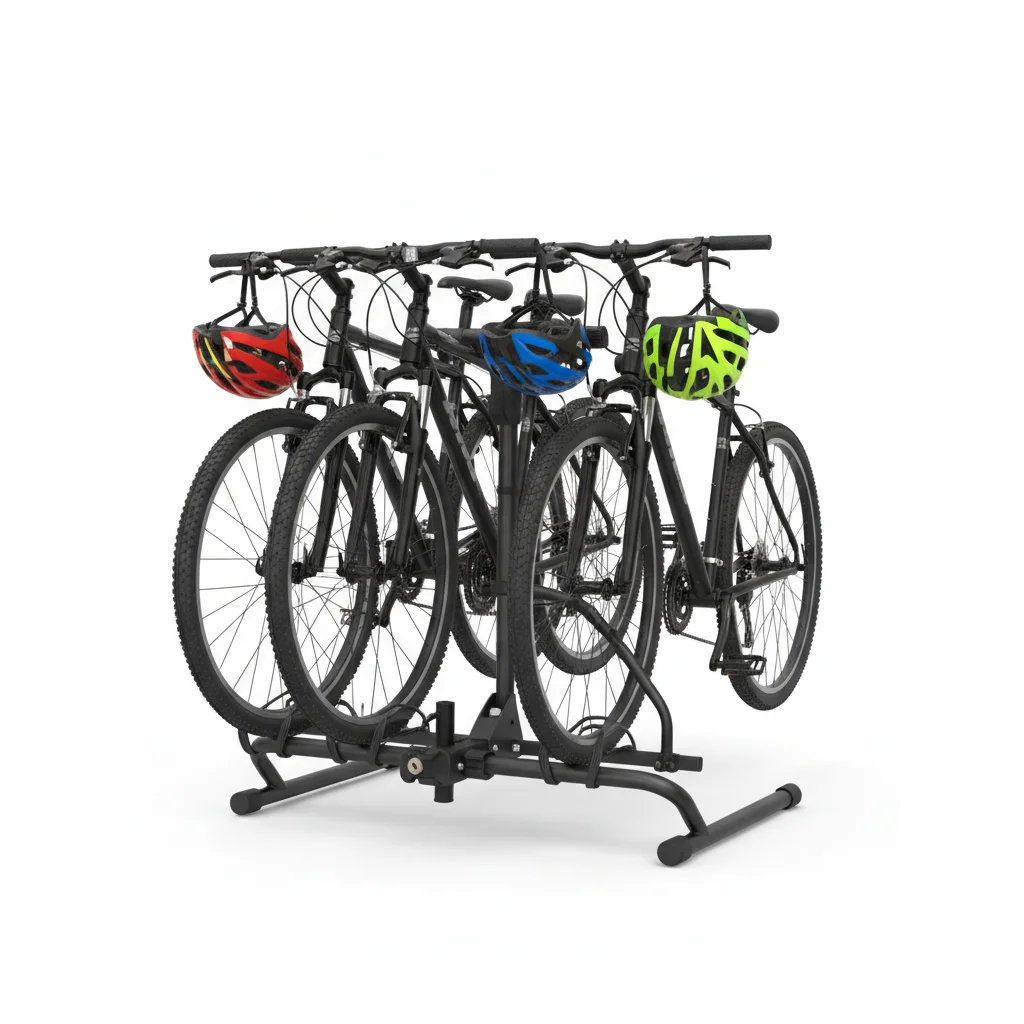
When selecting a hitch bike rack for four bikes, it’s crucial to consider several factors to ensure safety, compatibility, and ease of use. The primary considerations include the rack’s weight capacity, the type of hitch receiver on your vehicle, and the specific features that accommodate multiple bikes without damage or excessive sway. There are typically three main types of hitch racks suitable for four bikes: platform, hanging, and vertical racks, each offering distinct advantages for different bike styles and user preferences.
Understanding Hitch Receiver Classes and Weight Capacity
Your vehicle’s hitch receiver class is paramount when choosing a rack for four bikes. Class 2 hitches (1.25-inch receiver) generally have a lower tongue weight capacity, often limiting them to two or three bikes, or lighter bikes. Class 3 (2-inch receiver) and Class 4 (2-inch receiver) hitches offer significantly higher weight capacities, making them ideal for carrying four bikes, especially if they are heavier mountain bikes or electric bikes. Always check your vehicle’s owner’s manual for the exact tongue weight rating. Exceeding this limit can compromise safety and damage your vehicle’s hitch or frame. For four bikes, a 2-inch receiver is almost always recommended for stability and capacity.
Platform Racks for Four Bikes
Platform style hitch racks are a popular choice for carrying multiple bikes due to their stability and ease of loading. Each bike sits in its own tray, secured by wheel straps and a frame or wheel-clamping arm. This design minimizes bike-to-bike contact, reducing the risk of scratches and damage. When looking for a four-bike platform rack, prioritize models with adjustable trays to accommodate different wheelbases and bike sizes. Some advanced models offer integrated locks for added security. While generally more expensive, platform racks provide superior protection for your bikes.
Hanging Racks for Four Bikes
|
Our Picks for the Best Bike Rack in 2026
As an Amazon Associate I earn from qualifying purchases.
|
||
| Num | Product | Action |
|---|---|---|
| 1 | Vertical Bike Stand, Upright Bike Parking Rack Floor, Adjustable Bicycle Storage for Wheels Sizes up to 29", Freestanding Bicycle Organizer with Swivel Casters, Indoor Bike Holder for Garage 2-Pack |

|
| 2 | monTEK Swivel Bike Wall Mount, Bike Hangers for Garage, Space-Saving Vertical Bike Rack, Sturdy Bike Storage Rack Holds Up to 66lbs, Easy to Install, 4 Pack |
|
| 3 | Vertical Bike Parking Stand - Adjustable Height for 29"Wheels, Space-Saving & Freestanding Bike Rack for MTB/Road Bikes,No-Drill Installation Indoor Bike Storage for Apartments & Garages |
|
| 4 | CHEPARK Bike Floor Stand Rack- Indoor Bike Stand for Garage/Home - Bike Storage Bicycle Parking Rack Fit 20”-29” Mountain Road Bikes (1 Bike Rack) |
|
| 5 | KUAT Sherpa 2.0 Durable Lightweight Aluminum Compact 2 Bike Transporting Hitch Rack with Cable Lock & Foldable Tire Cradles | Capacity - 40 Lbs per Tray |
|
| 6 | Young Bike Rack Hitch for Car - 200LB 2-Bike Rack Hitch Mount Platform Style Hitch Bike Rack,Smart Tilting & Easy Fold for Car SUV with 2 Inch Receiver,Bike Carrier Fits Up to 5-inch Fat Tire |
|
| 7 | Vertical Bike Stand, Freestanding Bike Rack Garage Storage Upright Bicycle Floor Stand Indoor Bike Holder with Adjustable Height for Garage & Apartment - for Wheels Sizes up to 29” |
|
| 8 | 2 Bikes Floor Stand,Adjustable Bicycle Parking Rack with Hook for Garage/Indoor/Outdoor,Metal Cycle Storage Organizer Rack for Road Bikes |
|
| 9 | Allen Sports Deluxe 4-Bike Hitch Mount Rack (2-Inch Receiver) , Black |
|
| 10 | CyclingDeal Upright Bike Stand Floor - Vertical & Horizontal Bicycle Stand Bicycle Storage - Safe & Secure Bike Storage Rack - for Wheels Sizes up to 29" - Bike Rack Garage Bicycle Rack - Classic |
|
Hanging style hitch racks are often more budget-friendly and lighter than platform racks. Bikes are suspended by their top tubes from arms extending from the rack. While effective for carrying four bikes, it’s essential to use additional straps or bungee cords to prevent bikes from swinging and making contact with each other or your vehicle. Look for hanging racks with anti-sway cradles or rubberized straps that provide better bike separation and protection. These racks are generally best suited for traditional bike frames; some full-suspension or step-through frames may require a top tube adapter for proper fitment. Always ensure the rack has sufficient clearance from your vehicle’s bumper and exhaust.
Vertical Racks for Four Bikes
Vertical hitch racks are gaining popularity, especially among mountain bikers, for their ability to carry multiple bikes in a compact footprint. Bikes are loaded vertically, often by their front wheel, with the rear wheel secured. This design allows for excellent ground clearance and minimizes the overall length of the rack, making it easier to maneuver in tight spaces. For four bikes, vertical racks are incredibly efficient, keeping the bikes close to the vehicle. They are particularly good for bikes with longer wheelbases and can often accommodate different bike types, including some e-bikes, depending on the model. Ensure the rack’s loading height is manageable for your specific bikes and vehicle.
Security and Accessibility Features
When transporting four bikes, security becomes even more critical. Look for hitch racks that include integrated cable locks or hitch pin locks to deter theft. Many racks also offer a tilt or swing-away feature, allowing you to access your vehicle’s rear cargo area without removing the bikes. A tilt feature typically involves lowering the rack away from the vehicle, while a swing-away design pivots the entire rack to the side. Consider which feature best suits your needs for frequent rear access. Additionally, ensure the rack’s construction is robust, with durable materials and a strong powder-coat finish to withstand various weather conditions and road debris.
- Verify your vehicle’s hitch receiver class and tongue weight capacity.
- Choose between platform, hanging, or vertical racks based on bike type and budget.
- Prioritize racks with anti-sway features and good bike separation.
- Look for integrated security features like locks for bikes and the hitch.
- Consider tilt or swing-away functions for convenient rear vehicle access.

I got a hanging rack for our four bikes, and while it works, I’ve noticed a bit more sway than I’d like, especially with our heavier e-bikes. It’s fine for short trips, but I’m a little nervous about longer hauls. I probably should have paid more attention to the weight capacity for my specific bikes. It’s a decent rack for the price, though.
This hitch rack has been perfect for our family. We have a Class 4 hitch on our SUV, so we weren’t worried about capacity. The ease of use and the way it keeps the bikes separated to prevent damage is exactly what we needed. No more trying to cram bikes inside the car or dealing with flimsy strap-on racks. Highly recommend!
We needed a rack that could handle four bikes for our RV trips, and a vertical rack seemed like the best option for saving space. It’s great for getting the bikes up and out of the way, and it feels very secure. My only minor complaint is that it takes a little more effort to load the bikes compared to a platform style, but the compact footprint makes up for it.
I finally pulled the trigger on a platform hitch rack for my family’s bikes, and it’s been a game-changer. We have a mix of mountain bikes and kids’ bikes, and this rack handles them all without any issues. The stability is fantastic, even on longer trips, and loading/unloading is a breeze. Definitely worth the investment for anyone with a Class 3 hitch.