For most cyclists, the best way to open a trunk or hatch with a bike rack attached is by using a hitch-mounted rack with either a tilt-away or swing-away mechanism. These specialized features allow the rack to move away from the vehicle, providing access to the cargo area without removing bikes or the entire rack. Trunk-mounted racks typically block access, while roof-mounted racks offer unrestricted access but require lifting bikes overhead.
Understanding Car Bike Racks and Trunk Access
The world of car bike racks offers diverse options, each with unique implications for accessing your vehicle’s trunk or hatch. Choosing the right type depends heavily on your vehicle, frequency of use, and, crucially, your need for rear access.
Trunk-Mounted Bike Racks
Trunk-mounted bike racks are a popular choice for their affordability and compatibility with many sedans, hatchbacks, and SUVs that lack a hitch receiver. These racks attach directly to the vehicle’s rear, often using a system of straps and hooks. While convenient for occasional use, they generally pose significant challenges for trunk access. For browse all bike racks articles on this site.
Pros:
- Affordable: Typically the most budget-friendly option.
- No Hitch Required: Ideal for vehicles without a trailer hitch.
- Easy to Store: Many designs fold down for compact storage when not in use.
Cons:
- Limited Trunk Access: The primary drawback is that opening your trunk or hatch with a trunk-mounted rack installed is often impossible or unsafe, especially with bikes loaded. Attempting to do so can damage the rack, your vehicle’s paint, or the trunk mechanism.
- Potential for Paint Damage: Straps and contact points can scratch paint if not installed perfectly or if debris gets trapped.
- Rear Visibility: Can obstruct rear visibility and sometimes taillights or license plates.
- Less Secure: Generally less secure against theft compared to hitch or roof racks.
When to Use: Trunk-mounted racks are best for occasional riders or those with vehicles incompatible with other rack types, where rear access during transit is not a frequent necessity.
Hitch-Mounted Bike Racks
Hitch-mounted racks attach to a trailer hitch receiver on your vehicle, offering superior stability and capacity. This category is where you’ll find the most sophisticated solutions for maintaining trunk access, thanks to innovative tilt-away and swing-away mechanisms.
Pros:
- Excellent Stability: Very secure, minimizing bike sway during transport.
- High Capacity: Often accommodate multiple bikes, including heavier e-bikes.
- Enhanced Security: Many models come with integrated locks for bikes and the rack itself.
- Trunk Access Solutions: Many designs include features specifically for rear vehicle access.
Cons:
- Hitch Required: Requires a compatible trailer hitch to be installed on your vehicle, which can be an additional cost.
- More Expensive: Generally pricier than trunk-mounted racks.
- Weight: Can be heavy and bulky to install and remove.
When to Use: Ideal for frequent cyclists, those transporting multiple or heavy bikes, and anyone who needs reliable and regular access to their trunk or hatch.
Roof-Mounted Bike Racks
|
Our Picks for the Best Bike Rack in 2026
As an Amazon Associate I earn from qualifying purchases.
|
||
| Num | Product | Action |
|---|---|---|
| 1 | Vertical Bike Stand, Upright Bike Parking Rack Floor, Adjustable Bicycle Storage for Wheels Sizes up to 29", Freestanding Bicycle Organizer with Swivel Casters, Indoor Bike Holder for Garage 2-Pack |

|
| 2 | Vertical Bike Parking Stand - Adjustable Height for 29"Wheels, Space-Saving & Freestanding Bike Rack for MTB/Road Bikes,No-Drill Installation Indoor Bike Storage for Apartments & Garages |
|
| 3 | Young Bike Rack Hitch for Car - 200LB 2-Bike Rack Hitch Mount Platform Style Hitch Bike Rack,Smart Tilting & Easy Fold for Car SUV with 2 Inch Receiver,Bike Carrier Fits Up to 5-inch Fat Tire |
|
| 4 | 2 Bikes Floor Stand,Adjustable Bicycle Parking Rack with Hook for Garage/Indoor/Outdoor,Metal Cycle Storage Organizer Rack for Road Bikes |
|
| 5 | Allen Sports Deluxe 4-Bike Hitch Mount Rack (2-Inch Receiver) , Black |
|
| 6 | KUAT Sherpa 2.0 Durable Lightweight Aluminum Compact 2 Bike Transporting Hitch Rack with Cable Lock & Foldable Tire Cradles | Capacity - 40 Lbs per Tray |
|
| 7 | Vertical Bike Stand, Freestanding Bike Rack Garage Storage Upright Bicycle Floor Stand Indoor Bike Holder with Adjustable Height for Garage & Apartment - for Wheels Sizes up to 29” |
|
| 8 | CHEPARK Bike Floor Stand Rack- Indoor Bike Stand for Garage/Home - Bike Storage Bicycle Parking Rack Fit 20”-29” Mountain Road Bikes (1 Bike Rack) |
|
| 9 | CyclingDeal Upright Bike Stand Floor - Vertical & Horizontal Bicycle Stand Bicycle Storage - Safe & Secure Bike Storage Rack - for Wheels Sizes up to 29" - Bike Rack Garage Bicycle Rack - Classic |
|
| 10 | monTEK Swivel Bike Wall Mount, Bike Hangers for Garage, Space-Saving Vertical Bike Rack, Sturdy Bike Storage Rack Holds Up to 66lbs, Easy to Install, 4 Pack |
|
Roof-mounted bike racks secure bikes to the roof of your vehicle, typically on a pre-installed roof rack system. They keep bikes completely clear of the rear of the car, ensuring unrestricted trunk access.
Pros:
- Full Trunk Access: Offers completely unobstructed access to your trunk or hatch.
- Clear Rear View: Does not block your rear window, taillights, or license plate.
- Secure: Bikes are held firmly and are often lockable.
Cons:
- Lifting Required: Requires lifting bikes onto the roof, which can be challenging for heavier bikes or taller vehicles.
- Aerodynamic Drag: Can increase wind noise and decrease fuel efficiency.
- Height Clearance: Requires awareness of overhead clearances (garages, drive-thrus).
- Roof Rack System Needed: Requires a base roof rack system, which is an additional purchase.
When to Use: Best for cyclists who prioritize unobstructed rear access and are comfortable with overhead lifting, especially for lighter road bikes or when other rack types are not feasible.
How to Access Your Trunk With a Bike Rack Attached
The ability to open your trunk while a bike rack is installed varies significantly by rack type. Understanding these differences is key to choosing a system that meets your needs without frustration.
The Challenge with Trunk-Mounted Racks
With standard trunk-mounted bike racks, opening your trunk or hatch is generally not recommended and often impossible. These racks clamp or strap directly onto the edge of your trunk lid or hatch door. Any attempt to open the trunk will put immense strain on these attachment points, potentially bending the rack, damaging your vehicle’s sheet metal, or cracking the trunk lid. The weight of the rack itself, let alone with bikes loaded, is typically too much for the trunk struts or hinges to handle, often triggering automatic closing mechanisms on power liftgates. [cite: 1, 3 (search 3)]
DIY Workaround: Removing the Rack For trunk-mounted racks, the only safe “DIY” method for trunk access is to completely remove the bike rack from your vehicle. This means unhooking all straps, detaching the rack, and then storing it temporarily. If bikes are loaded, they must be removed first. While some newer trunk racks might offer a slight tilt feature when no bikes are loaded, this is rare and still often insufficient for full access.
The Solution with Hitch-Mounted Racks
Hitch-mounted bike racks are designed with convenience in mind, offering specific features that allow for rear vehicle access. These features are a major upgrade for anyone who needs to frequently get into their trunk without dismounting bikes or removing the entire rack.
Tilt-Away Feature
Many platform and hanging-style hitch racks come with a tilt-away mechanism. This allows the rack to pivot downwards and away from the vehicle, usually by pulling a lever or pin. This creates enough space between the rack and the car for a trunk or hatch to open, even with bikes still mounted. It’s a quick and easy solution for most needs.
Swing-Away Feature
The ultimate solution for trunk access on a hitch-mounted rack is the swing-away feature. These racks are built on a hinge system that allows the entire rack, with bikes loaded, to swing out to the side of the vehicle, often up to 90 or even 180 degrees. [cite: 1, 4 (search 2)] This provides completely unimpeded access to the rear cargo area, similar to if the rack wasn’t there at all. Swing-away racks are particularly popular for SUVs, vans, or vehicles with barn doors, where a tilting rack might still not provide sufficient clearance.
“For true, unrestricted trunk access with a loaded bike rack, a swing-away hitch rack is the gold standard. It’s an investment, but the convenience it offers is unparalleled for regular users.” – Alex Chen, Lead Product Engineer, Rack Innovations Inc.
Unrestricted Access with Roof-Mounted Racks
Roof-mounted bike racks inherently offer unrestricted access to your trunk or hatch. Since the bikes are carried on the roof, the rear of your vehicle remains completely clear. This is a significant advantage for those who frequently need to access their cargo area and prefer a “set it and forget it” approach regarding rear access. However, the trade-off is the need to lift bikes overhead and the potential impact on fuel economy and vehicle clearance.
Comparing Bike Rack Types for Trunk Access
To help you decide, here’s a detailed comparison focusing on the critical aspect of trunk access and related features.
| Feature | Trunk-Mounted Racks | Hitch-Mounted Racks (Tilt-Away/Swing-Away) | Roof-Mounted Racks |
|---|---|---|---|
| Trunk Access | Generally No (requires full removal) | Yes (via tilt-away or swing-away mechanism) | Always Yes (unobstructed) |
| Ease of Installation/Removal for Access | High effort (must remove entire rack/bikes) | Low effort (pull lever/pin, rack tilts/swings) | N/A (no removal needed for trunk access) |
| Security | Moderate (straps, basic locks) | High (integrated locks for rack/bikes, sturdy attachment) | High (bikes lock to rack, rack locks to vehicle) |
| Price | Low to Moderate | Moderate to High (especially for swing-away) | Moderate to High (requires base roof rack) |
| Capacity | 1-3 bikes, typically lighter bikes | 2-5 bikes, can carry heavier e-bikes | 1-4 bikes, depends on roof rack and vehicle capacity |
| Vehicle Compatibility | Broad, but can be finicky with spoilers/body styles | Requires trailer hitch; universal once hitch is installed | Requires compatible roof rack system |
Choosing the Right Bike Rack for Trunk Access (Buying Guide)
Selecting the ideal bike rack involves more than just how many bikes it can carry; your need for trunk access is a pivotal consideration.
Assess Your Needs
Before diving into specific models, take a moment to evaluate your usage patterns:
- How often do you need trunk access with bikes attached? If it’s a rare occurrence, a simpler solution might suffice. If it’s every ride, a tilt or swing-away feature is essential.
- How many bikes do you need to carry? This impacts the rack’s capacity and overall bulk.
- What type of vehicle do you have? Does it have a hitch receiver? Does it have a roof rack? Is it a sedan, SUV, or van?
- What is your budget? Higher convenience features often come with a higher price tag.
Key Factors to Consider
- Rack Type:
- Trunk-Mounted: Choose only if trunk access is a non-issue, or if you don’t mind removing the rack every time.
- Hitch-Mounted: The go-to for trunk access. Decide between tilt-away (good clearance) and swing-away (full, unobstructed clearance) based on your frequency of access and vehicle type (e.g., vans with barn doors often benefit most from swing-away).
- Roof-Mounted: Excellent for trunk access, but consider your ability to lift bikes and potential impacts on fuel economy.
- Specific Features: Look for the explicit mention of “tilt-away,” “swing-away,” or “rear vehicle access” in product descriptions for hitch racks.
- Durability and Material: Invest in a rack made from robust materials (e.g., steel, aluminum) with good anti-corrosion finishes for longevity.
- Installation Ease: Even if a rack offers great trunk access, complex installation can be a deterrent. Look for user-friendly designs.
- Security Features: Integrated cable locks for bikes and locking hitch pins for the rack add peace of mind.
Top Recommendations for Trunk Access
For optimal trunk access, hitch-mounted racks with either a tilt-away or swing-away mechanism are consistently the best choice. Brands like Thule, Yakima, RockyMounts, and Küat offer excellent options.
- For Tilting Access: Look for platform-style hitch racks from leading brands. They are generally easier to load and often feature quick-release tilt mechanisms.
- For Swing-Away Access: Models like the RockyMounts BackStage [cite: 4, 5 (search 2)] or specific Thule and StowAway swing-away models provide full 180-degree access, even with bikes loaded. These are particularly valuable for SUVs and vans where a traditional tilt might still limit door opening.
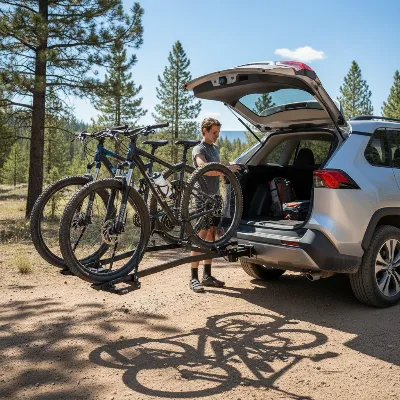 Hitch-mounted bike rack with swing-away feature providing full trunk access
Reputable Bike Rack Brands and Their Solutions
Several manufacturers stand out for their quality and innovative features related to trunk access.
Brands Known for Trunk Access Features
- Thule: A global leader, Thule offers a wide range of hitch-mounted racks with both tilt and swing-away functionalities, such as the Thule Vertex Swing Away [cite: 2 (search 2)] and various platform models designed for easy access. They also have trunk-mounted options like the Outway Platform that attempts to minimize obstruction.
- Yakima: Another industry giant, Yakima provides robust hitch racks with tilt features, ensuring convenient trunk access. Their trunk-mounted FullBack series is known for fit and security, though trunk access is still limited.
- Saris: Famous for their iconic Bones trunk rack series, Saris offers popular and versatile trunk-mounted options. While the Bones EX series has improved vehicle compatibility (including those with spoilers), they generally do not permit trunk opening when installed, especially with bikes.
- RockyMounts: Highly regarded for their innovative hitch racks, RockyMounts features the BackStage, which is notable for its 180-degree swing-away platform design, providing complete access to the vehicle’s rear. [cite: 4 (search 2)]
- CURT: Known for a comprehensive range of towing products, CURT also offers hitch-mounted bike racks with tilt-away features across their standard, premium, and tray-style lines, ensuring easy rear vehicle access. [cite: 3 (search 2)]
- StowAway: Specializes in heavy-duty hitch cargo carriers and bike racks, with their bike racks often integrating a robust SwingAway frame for full rear vehicle access. [cite: 1 (search 2)]
Highlighted Models with Easy Trunk Access
When considering models for their trunk access features, focus on hitch-mounted designs.
- RockyMounts BackStage: This platform rack provides unparalleled rear access due to its unique 180-degree swing-away functionality, even when fully loaded with bikes. It’s perfect for vans and SUVs.
- Thule T2 Pro XTR or XT Pro: While not a swing-away, these premium platform hitch racks offer an intuitive tilt-away mechanism that provides generous clearance for most vehicle hatches.
- Yakima HoldUp EVO: A popular platform rack known for its ease of use and tool-free installation, featuring a convenient tilt-away function.
- CURT Premium Hitch Bike Racks: These typically include a tilt-away shank, allowing the rack to pivot down and away from the vehicle for easy trunk entry.
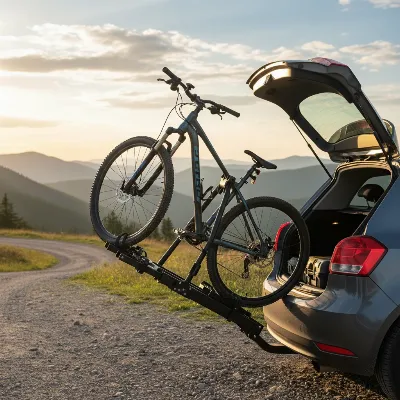 Tilting hitch bike rack in action, allowing hatch access
Conclusion
Navigating the world of bike racks to ensure seamless trunk access can seem daunting, but with the right information, you can make an informed decision. While trunk-mounted racks offer an affordable entry point, they almost universally restrict rear cargo access, often requiring complete removal. For true convenience and functionality, hitch-mounted racks featuring tilt-away or, even better, swing-away mechanisms are the superior choice, allowing you to access your trunk effortlessly even with bikes loaded. Roof-mounted racks also offer unrestricted access, provided you’re comfortable with lifting bikes overhead. By assessing your specific needs, considering your vehicle type, and understanding the features offered by reputable brands, you can find a bike rack that enhances your cycling adventures without compromising the practicality of your vehicle.
What features are most important to you when choosing a bike rack for your next adventure?
Frequently Asked Questions
Can I open my trunk with a trunk-mounted bike rack installed?
No, generally you cannot open your trunk with a trunk-mounted bike rack installed. These racks attach firmly to the trunk lid or hatch, and attempting to open it with the rack (especially with bikes) can cause damage to your vehicle, the rack, or both.
What is the difference between a tilt-away and a swing-away hitch bike rack?
A tilt-away hitch rack pivots downwards and away from the vehicle, providing clearance for the trunk to open. A swing-away hitch rack, however, swings out to the side, often up to 180 degrees, providing full, unobstructed access to the entire rear of the vehicle, even with bikes loaded.
Do roof-mounted bike racks block trunk access?
No, roof-mounted bike racks do not block trunk access at all. Since bikes are carried on the roof of your vehicle, the rear hatch or trunk remains completely free and accessible at all times, offering unrestricted cargo access.
Which type of bike rack is best for frequent trunk access?
Hitch-mounted bike racks with a swing-away feature are the best option for frequent trunk access. They allow the entire rack and bikes to move completely out of the way, providing unimpeded entry to your vehicle's cargo area, which is ideal for SUVs and vans.
Are DIY modifications safe for trunk-mounted bike racks?
No, it is not recommended to attempt DIY modifications to a trunk-mounted bike rack to allow trunk opening. These racks are not designed for such movement, and any alteration could compromise their safety, stability, and potentially damage your vehicle's sheet metal or paint.

I finally bit the bullet and got a hitch-mounted rack with a swing-away mechanism, and it’s been a game changer. Being able to get into my SUV’s trunk without taking off the bikes or the whole rack is incredibly convenient. It was a bit more of an investment than a trunk-mounted one, but totally worth it for the ease of access.
I’ve been using a trunk-mounted rack for a while because of the affordability, and it works fine for getting my bike to the trails. However, the point about it blocking trunk access is definitely true. It’s a real pain when I need to grab something from the back of my sedan after the bikes are loaded. Wish I’d considered that more before buying.
I was hesitant about roof-mounted racks because of lifting the bikes, but after trying one, I’m a convert. The unrestricted access to my trunk is fantastic, and it keeps the bikes out of the way. It took a little practice to get them up there smoothly, but now it’s no problem at all. Great for my smaller car.
The tilt-away feature on my new hitch rack is exactly what I needed. I drive a hatchback and frequently need to get into the back for gear, even with bikes on. This rack makes it so much easier than my old one where I had to completely unload everything. It’s a solid design and feels very secure.