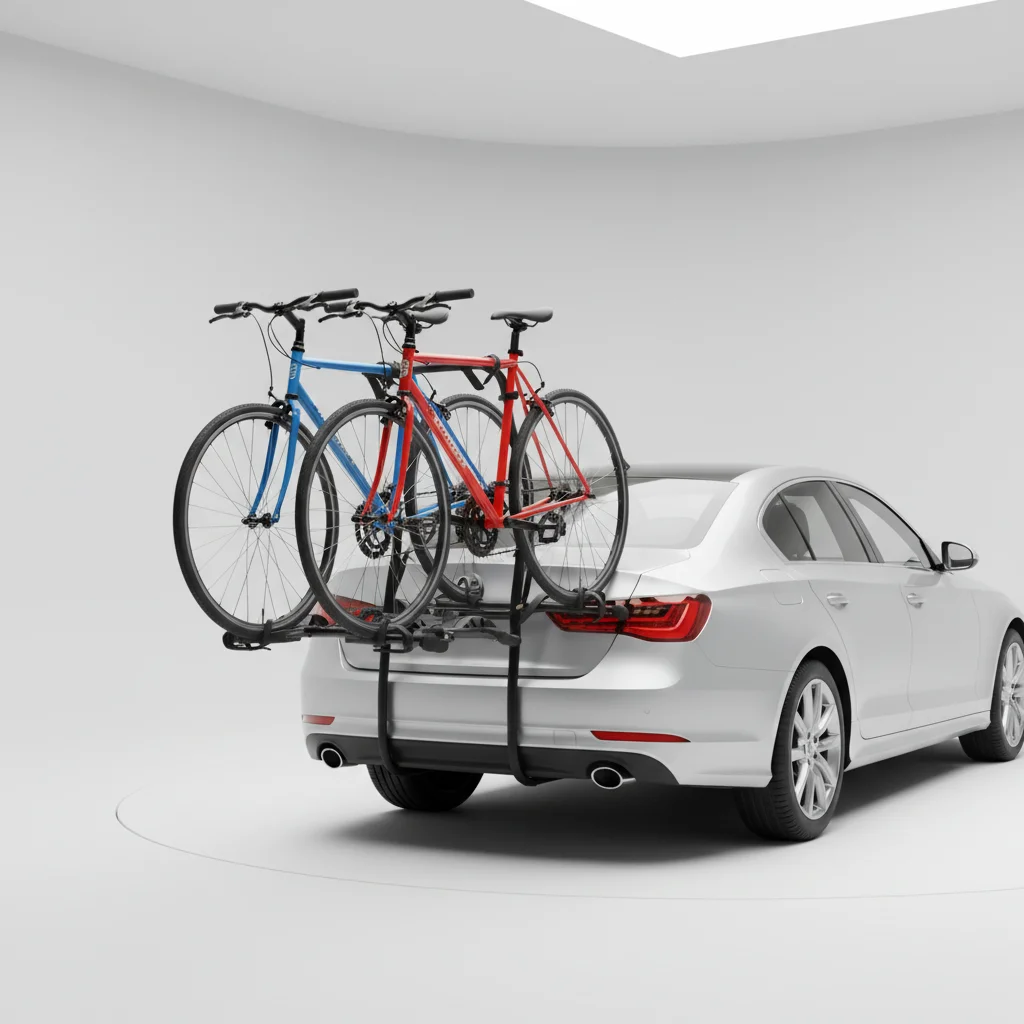
Finding the right trunk bike rack for sedans involves considering several key factors to ensure a secure and compatible fit. Unlike SUVs or trucks, sedans often have specific trunk lid designs and bumper clearances that necessitate careful selection. The best trunk racks for sedans prioritize adjustability, padded contact points, and a robust strapping system to protect both your car and your bikes during transport.
Key Considerations for Sedan Trunk Racks
When selecting a trunk bike rack for your sedan, pay close attention to the rack’s adjustability. Many models feature adjustable arms and leg positions to accommodate different trunk angles and bumper shapes. Look for racks with soft, non-marring pads that rest against your car’s paint, preventing scratches and dents. The strapping system is equally crucial; it should be easy to tighten and provide a firm, stable hold without obstructing taillights or license plates.
Types of Trunk Racks Suitable for Sedans
While many trunk racks are designed to be universal, certain styles are better suited for sedans. Frame-mount racks, which support bikes by their top tubes, are common. However, if your bike has a non-traditional frame (e.g., step-through, full suspension), you might need a frame adapter. Some racks offer a ‘hatchback’ mode, which can sometimes be adapted for sedans with short rear overhangs, but always verify compatibility with your specific vehicle model.
Installation Tips for Sedan Trunk Racks
|
Our Picks for the Best Bike Rack in 2026
As an Amazon Associate I earn from qualifying purchases.
|
||
| Num | Product | Action |
|---|---|---|
| 1 | Vertical Bike Stand, Upright Bike Parking Rack Floor, Adjustable Bicycle Storage for Wheels Sizes up to 29", Freestanding Bicycle Organizer with Swivel Casters, Indoor Bike Holder for Garage 2-Pack |

|
| 2 | Young Bike Rack Hitch for Car - 200LB 2-Bike Rack Hitch Mount Platform Style Hitch Bike Rack,Smart Tilting & Easy Fold for Car SUV with 2 Inch Receiver,Bike Carrier Fits Up to 5-inch Fat Tire |
|
| 3 | monTEK Swivel Bike Wall Mount, Bike Hangers for Garage, Space-Saving Vertical Bike Rack, Sturdy Bike Storage Rack Holds Up to 66lbs, Easy to Install, 4 Pack |
|
| 4 | 2 Bikes Floor Stand,Adjustable Bicycle Parking Rack with Hook for Garage/Indoor/Outdoor,Metal Cycle Storage Organizer Rack for Road Bikes |
|
| 5 | Vertical Bike Parking Stand - Adjustable Height for 29"Wheels, Space-Saving & Freestanding Bike Rack for MTB/Road Bikes,No-Drill Installation Indoor Bike Storage for Apartments & Garages |
|
| 6 | CHEPARK Bike Floor Stand Rack- Indoor Bike Stand for Garage/Home - Bike Storage Bicycle Parking Rack Fit 20”-29” Mountain Road Bikes (1 Bike Rack) |
|
| 7 | CyclingDeal Upright Bike Stand Floor - Vertical & Horizontal Bicycle Stand Bicycle Storage - Safe & Secure Bike Storage Rack - for Wheels Sizes up to 29" - Bike Rack Garage Bicycle Rack - Classic |
|
| 8 | Vertical Bike Stand, Freestanding Bike Rack Garage Storage Upright Bicycle Floor Stand Indoor Bike Holder with Adjustable Height for Garage & Apartment - for Wheels Sizes up to 29” |
|
| 9 | KUAT Sherpa 2.0 Durable Lightweight Aluminum Compact 2 Bike Transporting Hitch Rack with Cable Lock & Foldable Tire Cradles | Capacity - 40 Lbs per Tray |
|
| 10 | Allen Sports Deluxe 4-Bike Hitch Mount Rack (2-Inch Receiver) , Black |
|
Proper installation is paramount for safety and to prevent damage to your sedan. Always clean the contact points on your car (trunk lid, bumper, and side panels) before attaching the rack to avoid trapping dirt that could scratch the paint. Follow the manufacturer’s instructions meticulously, ensuring all straps are taut and buckles are securely fastened. Periodically check the straps during longer journeys, especially after the first few miles, as they can sometimes loosen slightly.
Ensuring Bike Security and Stability
Once the rack is securely mounted, focus on securing your bikes. Most trunk racks include integrated cradles and straps to hold the bike frames. For added stability and to prevent bikes from swinging into each other or your car, use additional bungee cords or hook-and-loop straps to secure wheels and prevent handlebar rotation. Consider a cable lock to deter theft, even for short stops.
Maintenance and Longevity
To extend the life of your trunk bike rack, perform regular maintenance. After each use, wipe down the rack to remove dirt, road grime, and any salt if you’ve driven in winter conditions. Inspect straps for fraying and buckles for damage. Lubricate moving parts, such as adjustment pins, periodically to ensure smooth operation. Storing the rack indoors when not in use will protect it from UV degradation and extreme weather, preserving its materials and functionality for years to come.
- Always clean car contact points before installation.
- Verify all straps are taut and buckles are secure.
- Use additional straps to stabilize bike wheels and handlebars.
- Inspect the rack for wear and tear after each trip.
- Store the rack indoors when not in use to prolong its lifespan.
