Embarking on cycling adventures often requires transporting your prized possession, and a reliable bike rack is essential for getting your bicycle safely to its destination. Among the myriad options available, roof mounted bike racks offer a unique set of advantages, keeping your bikes clear of your vehicle’s rear and ensuring unhindered access to your trunk. For cyclists who value security, versatility, and maintaining rear visibility, a roof mounted system is often the preferred choice. However, navigating the market to find the perfect rack can be challenging with countless models promising superior performance. This comprehensive guide will simplify your decision, exploring the different types of roof racks, highlighting the top 5 best roof mounted bike racks for 2026, and providing a detailed buying guide to match your specific needs.
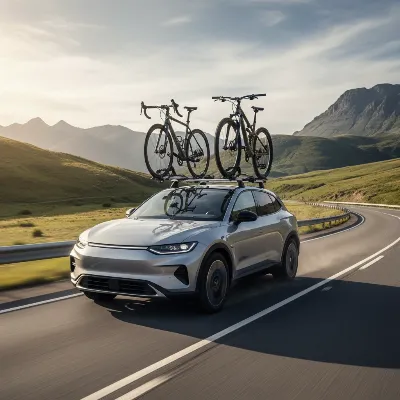 An SUV with multiple bicycles mounted on its roof rack, traveling on a scenic highway under a clear sky.
Understanding Roof Mounted Bike Racks
Roof mounted bike racks attach to your vehicle’s roof using crossbars, offering a secure and stable way to transport bicycles. This method keeps bikes entirely out of the way, preserving your vehicle’s interior space and ensuring your rear view remains unobstructed. They are particularly popular for smaller vehicles without hitch receivers or for those who need to maintain full access to their trunk.
However, roof racks do come with considerations. Lifting bikes onto the roof, especially for taller vehicles or heavier e-bikes, can be strenuous. The added height requires vigilance when entering garages, drive-thrus, or low-clearance areas. Furthermore, carrying bikes on the roof can increase wind resistance, potentially impacting fuel efficiency. Despite these factors, for many cyclists, the benefits of convenience and vehicle access often outweigh the drawbacks.
Types of Roof Mounted Bike Racks
Roof mounted bike racks come in several primary styles, each with distinct advantages and disadvantages tailored to different cyclist preferences and bike types. Understanding these variations is crucial for selecting the ideal system for your adventures.
Fork Mount Bike Racks
Fork mount racks secure the bicycle by its front fork, requiring the removal of the front wheel. This design typically results in a lower profile, which can be beneficial for reducing overall vehicle height and minimizing wind resistance.
- Pros:
- Superior Stability: Securing the bike directly by its fork offers exceptional stability, reducing sway during transit.
- Lower Profile: With the front wheel removed, the bike sits lower on the roof, which can be advantageous for clearance and aerodynamics.
- No Frame Contact: Ideal for bikes with delicate carbon frames, as clamping occurs only at the fork dropouts.
- Lightweight: Often lighter in construction compared to wheel-on designs.
- Cons:
- Front Wheel Removal: Requires an extra step of removing and storing the front wheel, which can be inconvenient.
- Thru-Axle Adapters: Modern bikes with thru-axles often need specific adapters, adding to the cost and complexity.
- Potential for Dirt/Grease: The removed front wheel might need to be stored inside the vehicle, potentially bringing dirt or grease inside.
|
Our Picks for the Best Bike Rack in 2026
As an Amazon Associate I earn from qualifying purchases.
|
||
| Num | Product | Action |
|---|---|---|
| 1 | monTEK Swivel Bike Wall Mount, Bike Hangers for Garage, Space-Saving Vertical Bike Rack, Sturdy Bike Storage Rack Holds Up to 66lbs, Easy to Install, 4 Pack |

|
| 2 | CHEPARK Bike Floor Stand Rack- Indoor Bike Stand for Garage/Home - Bike Storage Bicycle Parking Rack Fit 20”-29” Mountain Road Bikes (1 Bike Rack) |
|
| 3 | Allen Sports Deluxe 4-Bike Hitch Mount Rack (2-Inch Receiver) , Black |
|
| 4 | Vertical Bike Stand, Upright Bike Parking Rack Floor, Adjustable Bicycle Storage for Wheels Sizes up to 29", Freestanding Bicycle Organizer with Swivel Casters, Indoor Bike Holder for Garage 2-Pack |
|
| 5 | Vertical Bike Parking Stand - Adjustable Height for 29"Wheels, Space-Saving & Freestanding Bike Rack for MTB/Road Bikes,No-Drill Installation Indoor Bike Storage for Apartments & Garages |
|
| 6 | 2 Bikes Floor Stand,Adjustable Bicycle Parking Rack with Hook for Garage/Indoor/Outdoor,Metal Cycle Storage Organizer Rack for Road Bikes |
|
| 7 | KUAT Sherpa 2.0 Durable Lightweight Aluminum Compact 2 Bike Transporting Hitch Rack with Cable Lock & Foldable Tire Cradles | Capacity - 40 Lbs per Tray |
|
| 8 | Young Bike Rack Hitch for Car - 200LB 2-Bike Rack Hitch Mount Platform Style Hitch Bike Rack,Smart Tilting & Easy Fold for Car SUV with 2 Inch Receiver,Bike Carrier Fits Up to 5-inch Fat Tire |
|
| 9 | Vertical Bike Stand, Freestanding Bike Rack Garage Storage Upright Bicycle Floor Stand Indoor Bike Holder with Adjustable Height for Garage & Apartment - for Wheels Sizes up to 29” |
|
| 10 | CyclingDeal Upright Bike Stand Floor - Vertical & Horizontal Bicycle Stand Bicycle Storage - Safe & Secure Bike Storage Rack - for Wheels Sizes up to 29" - Bike Rack Garage Bicycle Rack - Classic |
|
Wheel Mount (Upright) Bike Racks
Wheel mount, also known as upright, bike racks hold the bicycle by its wheels, typically using an arm that clamps onto the front wheel or frame, and a strap for the rear wheel. This style allows bikes to remain fully assembled, offering quicker loading and unloading.
- Pros:
- No Wheel Removal: Bikes can be loaded quickly without the hassle of removing the front wheel.
- User-Friendly: Generally easier and faster to use for quick stops or frequent transport.
- Universal Compatibility: Accommodates a wide range of bike types and wheel sizes without needing adapters for different axle standards.
- Cons:
- Taller Profile: Bikes sit higher on the roof, increasing overall vehicle height and wind resistance.
- Less Stable: Can exhibit more sway than fork-mount racks, especially with heavier bikes.
- Frame Contact: Some designs may clamp onto the bike frame, which can be a concern for carbon frames or paintwork.
- Mudguard Interference: Certain designs may interfere with full-length front mudguards.
Frame Clamp Bike Racks
While often a subset of upright racks, frame clamp systems specifically secure the bike by clamping directly onto the downtube or other frame sections. The Thule ProRide 598 is a classic example of this design.
- Pros:
- Secure Hold: Provides a very firm grip on the bike frame, minimizing movement.
- No Wheel Removal: Like other upright racks, bikes can be loaded with both wheels on.
- Good Compatibility: Generally works with a wide range of bike sizes and wheel diameters.
- Cons:
- Frame Contact Issues: Direct clamping on the frame can be a concern for paint damage or, more critically, for the structural integrity of lightweight carbon frames.
- Loading Angle: Some models might require specific angles for loading, making it slightly less intuitive than wheel-only clamping systems.
Suction Mount Bike Racks
Suction mount racks utilize powerful vacuum cups to attach directly to the vehicle’s roof, offering a highly versatile and portable solution that doesn’t require permanent crossbars.
- Pros:
- Universal Fit: Can be used on virtually any vehicle with a clean, flat surface, regardless of roof rail systems.
- Easy to Install/Remove: Quick to attach and detach, making them ideal for occasional use or switching between vehicles.
- Compact Storage: Small and lightweight, making them easy to store when not in use.
- Cons:
- No Integrated Lock: Often lack integrated locking mechanisms for the bike or the rack itself, requiring external security.
- Dependence on Clean Surface: Requires a perfectly clean and smooth mounting surface for optimal suction, which can be challenging in certain conditions.
- Trust in Suction: While proven safe, some users may feel less confident in suction-based attachment compared to mechanical clamps.
- Monitoring Required: It’s often recommended to check the vacuum indicators on longer trips to ensure secure attachment.
Top 5 Best Roof Mounted Bike Racks to Buy in 2026
Choosing the right roof mounted bike rack involves balancing ease of use, security, compatibility, and budget. Here are five top-rated models that stand out for their performance, features, and user satisfaction in 2026.
1. Yakima HighRoad
The Yakima HighRoad is frequently hailed as an exceptional choice for its blend of user-friendliness and robust security. This premium wheel-on rack is designed for minimal contact with your bike’s frame, clamping down on the front wheel to secure it.
- Key Features: Tool-free installation, no frame contact, fits most wheel sizes (26″–29″ wheels, 23mm–4.0″ tires), integrated cable lock (sold separately).
- Pros: Incredibly easy to load and unload bikes, protects carbon frames, highly stable.
- Cons: Can be pricey, not ideal for full-length mudguards, added height.
- Ideal User: Cyclists with carbon bikes or those prioritizing quick, easy loading without front wheel removal, especially on taller vehicles where frame clamps might be awkward.
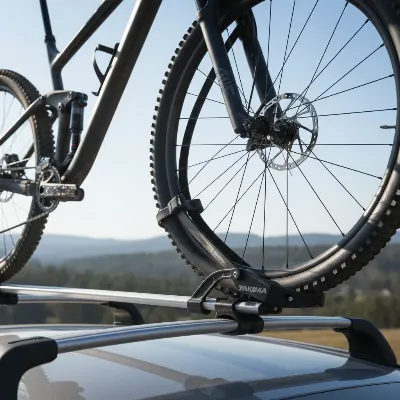 A close-up shot of the Yakima HighRoad roof mounted bike rack, securely holding a mountain bike by its front wheel on a vehicle roof.
2. Thule UpRide
Thule’s UpRide offers a versatile and secure solution for transporting bikes without any frame contact, making it a favorite for those with delicate or custom paint jobs. It holds the bike exclusively by its wheels.
- Key Features: No frame contact, fits most bikes (20-29″ wheels, up to 3″ tires, or 5″ with adapter), universal mounting to roof bars, integrated cable lock.
- Pros: Excellent for carbon frames, very easy to load, sleek design, protects wheels with rubber covers on straps.
- Cons: Taller profile, heavier than some fork-mount options, security features for the rack itself might be limited when no bike is mounted.
- Ideal User: Anyone with valuable bikes, especially carbon, who needs a quick and secure wheel-on solution with broad compatibility.
3. Kuat Piston SR
The Kuat Piston SR stands out as a premium roof mounted bike rack, leveraging Kuat’s renowned build quality and innovative features. It’s a wheel-on system that offers exceptional security and ease of use, featuring a robust, automotive-grade construction.
- Key Features: One-handed loading, hydro-pneumatic arms, no frame contact, integrated cable lock, accommodates various wheel sizes (18″-29″ wheels, up to 5″ tires), aluminum construction.
- Pros: Extremely durable and high-quality construction, smooth and easy loading/unloading, sleek aesthetics, excellent bike security.
- Cons: Very expensive, heavier than many other roof racks.
- Ideal User: Cyclists seeking the absolute best in terms of build quality, ease of use, and premium features, willing to invest in a top-tier rack.
4. Yakima HighSpeed
For those who prefer the stability and lower profile of a fork-mount system, the Yakima HighSpeed is a top contender. It’s designed to be streamlined and user-friendly, compatible with a wide array of fork standards.
- Key Features: Tool-free installation, universal mounting (fits most crossbars), fits various fork types (quick-release and thru-axle with adapters), integrated cable lock.
- Pros: Superb stability for diverse bike types, low profile reduces wind resistance, quick and easy installation on crossbars.
- Cons: Requires front wheel removal, additional adapters might be needed for specific thru-axle sizes, can be challenging for users who dislike removing wheels.
- Ideal User: Riders who prioritize maximum stability and a lower vehicle profile, especially those with multiple bikes that use different axle standards, and are comfortable with front wheel removal.
5. SeaSucker Talon MAX / Talon 1
The SeaSucker Talon series offers a truly unique approach to roof mounted bike transport with its powerful vacuum cup mounting system. It’s an excellent choice for vehicles without traditional roof rack systems or for users who need maximum portability. The Talon MAX is designed for heavier bikes up to 45 pounds, while the Talon 1 is for standard bikes.
- Key Features: Suction cup attachment, no crossbars required, compact and lightweight, highly portable.
- Pros: Universal compatibility with almost any car, extremely easy to install and remove, small footprint for storage.
- Cons: No integrated locks (requires separate purchase), requires clean surface for secure attachment, vacuum pumps need occasional monitoring.
- Ideal User: Individuals who frequently switch vehicles, travel with their bikes, or own a car without pre-installed crossbars and prefer a non-permanent, highly portable solution.
> “Choosing a roof rack isn’t just about carrying a bike; it’s about extending your adventures without compromise. Prioritize the rack that complements your bike, your vehicle, and your lifestyle.” – Alex Miller, Lead Technician at ReviewRevise.com
Comparing the Best Roof Mounted Bike Racks
To help you make an informed decision, here’s a detailed comparison of our top 5 picks:
| Model | Type | Price Range (Approx.) | Capacity (per bike) | Ease of Use | Security | Key Feature |
|---|---|---|---|---|---|---|
| Yakima HighRoad | Wheel Mount | $300 – $350 | 1 bike (40 lbs) | Excellent | Good (cable lock) | No frame contact, tool-free installation |
| Thule UpRide | Wheel Mount | $280 – $330 | 1 bike (44 lbs) | Excellent | Good (cable lock) | Universal wheel-only clamping, carbon-friendly |
| Kuat Piston SR | Wheel Mount | $400 – $450 | 1 bike (67 lbs) | Superior | Excellent | Hydro-pneumatic arms, premium build, heavy duty |
| Yakima HighSpeed | Fork Mount | $300 – $350 | 1 bike (35 lbs) | Good | Good (cable lock) | Streamlined, low profile, wide fork compatibility |
| SeaSucker Talon MAX | Suction Mount | $350 – $400 | 1 bike (45 lbs) | Excellent | Fair (no integrated) | Universal fit, ultimate portability, no crossbars |
Note: Prices are approximate and can vary based on retailer and current promotions.
Buying Guide for Your Roof Mounted Bike Rack
Selecting the ideal roof mounted bike rack requires careful consideration of your personal needs, your bike’s specifications, and your vehicle’s capabilities. Here’s a guide to help you make the best choice.
Assessing Your Usage Needs
Before diving into features, take a moment to define what you truly need from a bike rack.
- Number of Bikes: How many bicycles do you typically need to transport? Most roof racks are single-bike carriers, meaning you’ll need multiple units for multiple bikes, assuming your roof crossbars can accommodate them.
- Type of Bike: Do you ride a lightweight road bike, a heavy mountain bike, an e-bike, or a carbon-framed beauty? Your bike’s weight and frame material will influence the rack type you choose, especially regarding frame contact.
- Vehicle Type: Do you drive a low-slung sedan or a tall SUV? The height of your vehicle will significantly impact the ease of loading and unloading a roof rack. Do you already have factory crossbars, or will you need to invest in a full roof rack system?
- Budget: Roof racks range from entry-level options to premium systems. Establish a realistic budget that includes any necessary crossbars or adapters.
- Frequency of Use: If you transport bikes daily, ease of loading and durability will be paramount. For occasional trips, portability or a simpler setup might suffice.
 A mountain biker carefully lifting their bike onto a roof mounted rack on an SUV, showing the ease of use of a wheel-on rack.
Key Factors to Consider
Once your needs are clear, evaluate these critical factors when comparing different roof mounted bike racks.
- Mounting Mechanism:
- Fork Mount: Offers maximum stability and a lower profile, great for carbon bikes. Requires front wheel removal.
- Wheel Mount (Upright): Easiest for quick loading as both wheels stay on. Consider designs that avoid frame contact if you have a carbon frame.
- Frame Clamp: Very secure but can put pressure on carbon frames or scratch paint.
- Suction Mount: Unbeatable for versatility and ease of installation on any car, but requires external security and clean surfaces.
- Ease of Loading/Unloading: This is a major factor, especially if you’re shorter or have a taller vehicle. Look for racks with ergonomic designs, single-handed operation, or low lifting requirements.
- Security Features: Integrated locks for both the bike to the rack and the rack to the crossbars are crucial. For suction cup racks, plan for additional locking cables.
- Durability and Material: Look for robust materials like aluminum, steel, or high-quality composites that can withstand various weather conditions and road vibrations.
- Compatibility: Ensure the rack is compatible with your vehicle’s crossbars (round, square, aero bars) and your bike’s wheel size, tire width, and axle standards.
- Aerodynamics and Fuel Economy: While all roof racks will impact fuel efficiency to some extent, some designs are more aerodynamic than others, potentially offering marginal improvements.
Choosing Your Perfect Roof Mounted Bike Rack
After considering all factors, narrow down your choices. If you have a carbon bike and prioritize frame protection and stability, a high-quality wheel-on rack like the Yakima HighRoad or Thule UpRide, or a fork-mount like the Yakima HighSpeed, might be best. If budget allows for the absolute best in durability and ease, the Kuat Piston SR is an exceptional investment. For ultimate flexibility and non-permanent solutions on any vehicle, the SeaSucker Talon MAX is unrivalled. Always read user reviews and consider professional installations if you’re unsure about fitting.
Leading Brands in Roof Mounted Bike Racks
The market for roof mounted bike racks is dominated by a few key players known for their innovation, quality, and extensive product lines.
- Thule: A Swedish brand renowned for its robust and user-friendly transport solutions. Thule racks are known for their strong build, secure locking mechanisms, and wide compatibility with various vehicles and bike types. Their UpRide and ProRide models are benchmarks in the industry.
- Yakima: An American company that offers a diverse range of bike, snow, and water sports carriers. Yakima is celebrated for its intuitive designs, easy installation, and durable products, with the HighRoad and HighSpeed being particularly popular roof-mounted options.
- Kuat: Known for its premium, aesthetically pleasing, and highly functional racks. Kuat products often feature high-end materials like aluminum and innovative loading mechanisms, catering to cyclists who seek top-tier performance and style, exemplified by the Piston SR.
- 1Up USA: A brand that has built a strong reputation for its robust, modular, and minimalist designs, particularly praised for their exceptional build quality and tire-only contact. Their roof rack systems are highly regarded for their durability and secure bike hold.
- SeaSucker: A unique player in the market, specializing in vacuum cup mounted systems. SeaSucker provides highly portable and universally compatible solutions that don’t require permanent roof rack installations, making them ideal for specific user needs.
These brands consistently deliver reliable roof mounted bike racks, each with distinct philosophies and features that cater to different segments of the cycling community.
Conclusion
Selecting the best roof mounted bike rack for your vehicle and cycling adventures involves a thoughtful balance of security, convenience, and compatibility. Whether you prioritize the unwavering stability of a fork-mount system, the effortless loading of a wheel-on design, or the unparalleled versatility of a suction-cup rack, the market offers a fantastic array of options in 2026. Models like the Yakima HighRoad, Thule UpRide, Kuat Piston SR, Yakima HighSpeed, and SeaSucker Talon MAX stand out for their innovative features, robust construction, and reliable performance. By carefully assessing your specific needs and considering the key factors outlined in our buying guide, you can confidently choose a roof rack that will serve as a dependable partner for countless journeys. Which of these top contenders will elevate your next cycling excursion?
Frequently Asked Questions
Are roof mounted bike racks bad for fuel economy?
Yes, roof mounted bike racks can impact fuel economy due to increased wind resistance. The degree of impact varies depending on the rack design, the number of bikes, your vehicle’s aerodynamics, and driving speed, but a reduction of 10-25% or even more is possible.
Can I install a roof mounted bike rack by myself?
Most roof mounted bike racks are designed for DIY installation and come with detailed instructions. Basic fork and wheel mount racks typically require minimal tools, often just a wrench or Allen key. Suction cup racks are even simpler to attach. However, for a complete crossbar system, professional installation might be beneficial.
Are roof mounted bike racks secure against theft?
Many roof mounted bike racks include integrated locking mechanisms to secure your bike to the rack and the rack to your crossbars. While these offer a good deterrent for casual theft, no rack is entirely theft-proof. For maximum security, always use additional cable locks, especially during extended stops or overnight.
What is the maximum speed I can drive with a bike on the roof?
Most bike rack manufacturers recommend a maximum speed limit, often around 65-80 mph (100-130 km/h), when carrying bikes. Always consult your specific rack’s manual for precise recommendations. Driving at excessive speeds with bikes on the roof can compromise safety and potentially damage the rack or bikes.
Can roof mounted bike racks damage my car’s roof or paint?
When properly installed and used according to manufacturer instructions, roof mounted bike racks should not damage your car’s roof or paint. It’s crucial to ensure all contact points are clean and correctly tightened. Frame clamp racks might cause minor scuffs on bike frames if not carefully loaded, but modern designs are often padded to mitigate this.
Are roof mounted bike racks compatible with e-bikes?
Many modern roof mounted bike racks are designed to accommodate the heavier weight of e-bikes, with increased weight capacities (e.g., up to 45-67 lbs per bike). Always check the specific weight limit of the rack to ensure it can safely support your e-bike. Lifting an e-bike onto a roof rack can also be more challenging due to its weight.
