Transporting electric bikes, or e-bikes, can be a delightful gateway to new adventures and challenging trails. However, these powerful machines come with a significant difference from traditional bicycles: their weight. E-bikes, often weighing between 40 to 80 pounds, pose a unique challenge, especially when loading them onto a tall hitch rack. This guide will walk you through safe, effective DIY methods and smart strategies to load your e-bike, ensuring both your bike and vehicle remain secure and undamaged. Getting your e-bike onto the rack shouldn’t be the hardest part of your ride.
Understanding E-Bikes and Tall Hitch Racks
E-bikes are revolutionizing cycling, but their added components—motor, battery, and reinforced frames—make them considerably heavier and often bulkier than their analog counterparts. This substantial weight is the primary factor dictating how you should transport them. Standard bike racks, especially those designed for lighter bikes, may lack the necessary weight capacity and robust securing mechanisms for e-bikes, potentially leading to rack failure or damage to your valuable equipment.
When it comes to vehicle-mounted transport, hitch racks are widely regarded as the superior choice for e-bikes. Unlike roof racks, which require significant overhead lifting and can affect your vehicle’s aerodynamics and clearance, hitch racks keep your e-bike lower to the ground. This lower position inherently offers greater stability and makes the loading process more manageable. A “tall” hitch rack, while providing better ground clearance for diverse terrain, also presents a higher lift requirement, necessitating thoughtful loading strategies.
Choosing the right hitch rack is paramount. Look for platform-style racks specifically designed for e-bikes, which can typically support 60 to 100 pounds per bike. These racks feature sturdy wheel trays and strong clamping systems, often incorporating anti-wobble technology for enhanced stability during transit. Verify that the rack’s weight capacity exceeds the total weight of your e-bike(s) and that its hitch size (usually 2 inches for heavy-duty models) matches your vehicle’s receiver.
Essential Preparations Before Loading
Before you even think about lifting your e-bike, a thorough preparation of both your vehicle and the rack, along with the e-bike itself, can prevent accidents and damage. This crucial step sets the foundation for a safe and hassle-free loading experience.
First, ensure your vehicle is parked on a flat, stable, and well-lit surface. This provides a level ground for the rack and bike, minimizing instability during the loading process. Double-check that your hitch rack is securely attached to your vehicle’s hitch receiver according to the manufacturer’s instructions. All bolts, pins, and locking mechanisms should be tight and properly engaged. Give the rack a firm shake to confirm it’s stable and has no excessive play.
Next, prepare your e-bike by lightening its load as much as possible. The single most impactful step is to remove the battery if it’s detachable. E-bike batteries can weigh anywhere from 5 to 10 pounds or more, and removing them significantly reduces the overall weight you need to lift. Store the battery securely inside your vehicle, ideally in a climate-controlled area, away from direct sunlight or extreme temperatures. Remove any loose accessories such as water bottles, saddlebags, lights, or bike locks that could fall off during transport or obstruct the securing process. Cleaning your e-bike before loading can also help prevent dirt and grime transfer to your vehicle or rack, and allows for easier inspection of components.
Mastering the Lift: Loading Your E-Bike Safely
Loading a heavy e-bike onto a tall hitch rack often feels like a feat of strength, but with the right techniques and tools, it can be a manageable DIY task. The key is to leverage your body mechanics and consider assistance options.
Proper Lifting Techniques for Heavy E-Bikes
|
Our Picks for the Best Bike Rack in 2026
As an Amazon Associate I earn from qualifying purchases.
|
||
| Num | Product | Action |
|---|---|---|
| 1 | 2 Bikes Floor Stand,Adjustable Bicycle Parking Rack with Hook for Garage/Indoor/Outdoor,Metal Cycle Storage Organizer Rack for Road Bikes |

|
| 2 | CyclingDeal Upright Bike Stand Floor - Vertical & Horizontal Bicycle Stand Bicycle Storage - Safe & Secure Bike Storage Rack - for Wheels Sizes up to 29" - Bike Rack Garage Bicycle Rack - Classic |
|
| 3 | Vertical Bike Stand, Upright Bike Parking Rack Floor, Adjustable Bicycle Storage for Wheels Sizes up to 29", Freestanding Bicycle Organizer with Swivel Casters, Indoor Bike Holder for Garage 2-Pack |
|
| 4 | KUAT Sherpa 2.0 Durable Lightweight Aluminum Compact 2 Bike Transporting Hitch Rack with Cable Lock & Foldable Tire Cradles | Capacity - 40 Lbs per Tray |
|
| 5 | monTEK Swivel Bike Wall Mount, Bike Hangers for Garage, Space-Saving Vertical Bike Rack, Sturdy Bike Storage Rack Holds Up to 66lbs, Easy to Install, 4 Pack |
|
| 6 | Allen Sports Deluxe 4-Bike Hitch Mount Rack (2-Inch Receiver) , Black |
|
| 7 | Vertical Bike Parking Stand - Adjustable Height for 29"Wheels, Space-Saving & Freestanding Bike Rack for MTB/Road Bikes,No-Drill Installation Indoor Bike Storage for Apartments & Garages |
|
| 8 | Vertical Bike Stand, Freestanding Bike Rack Garage Storage Upright Bicycle Floor Stand Indoor Bike Holder with Adjustable Height for Garage & Apartment - for Wheels Sizes up to 29” |
|
| 9 | CHEPARK Bike Floor Stand Rack- Indoor Bike Stand for Garage/Home - Bike Storage Bicycle Parking Rack Fit 20”-29” Mountain Road Bikes (1 Bike Rack) |
|
| 10 | Young Bike Rack Hitch for Car - 200LB 2-Bike Rack Hitch Mount Platform Style Hitch Bike Rack,Smart Tilting & Easy Fold for Car SUV with 2 Inch Receiver,Bike Carrier Fits Up to 5-inch Fat Tire |
|
When lifting an e-bike by yourself, always prioritize your back’s safety. Avoid bending at the waist; instead, lift with your legs. Stand with your feet shoulder-width apart, knees bent, and maintain a straight back. Grip the e-bike firmly at the strongest points, such as the lower frame near the crank and the handlebars.
A highly effective DIY technique involves lifting one end of the bike at a time. Position the e-bike perpendicular to the rack. First, lift the front wheel and carefully place it into the designated wheel tray on the rack. While holding the front wheel securely in place with one hand or leaning the bike against the rack, shift your grip to the rear of the e-bike. Then, lift the rear wheel and guide it into its tray. This method effectively reduces the amount of weight you need to lift at any single moment, making the process much more manageable. Use the bike’s brakes to control movement and stabilize it as you maneuver.
Utilizing Ramps and Lift-Assist Devices
For those who find lifting challenging, or for exceptionally heavy e-bikes, ramps are a major upgrade. Many e-bike specific hitch racks come with integrated ramps, or you can purchase an accessory ramp. Position the ramp securely from the ground to the rack’s wheel tray. While holding the handlebars firmly and controlling the bike’s speed with the brakes, slowly roll the e-bike up the ramp. This eliminates the need for any heavy lifting.
Beyond simple ramps, several innovative lift-assist devices are available. These range from electric motorized lifts that gently raise your e-bike to rack level with the push of a button, to manual ratcheting systems that help tilt and lift the rack with less effort. Such devices are particularly useful for individuals with physical limitations or for frequent e-bike transport. Investing in a lift-assist solution can save your back and make your biking adventures much more accessible.
Assisted Loading: Two-Person Techniques
If you’re consistently struggling with solo loading, or if your e-bike is particularly cumbersome, enlisting the help of a second person is always the safest and easiest option. With two people, one can stabilize the front of the bike while the other lifts and guides the rear, or you can each take a side of the bike, coordinating your lift. This shared effort significantly reduces strain and improves control during placement on the rack. Communicate clearly to ensure smooth, synchronized movements, preventing drops or misalignment.
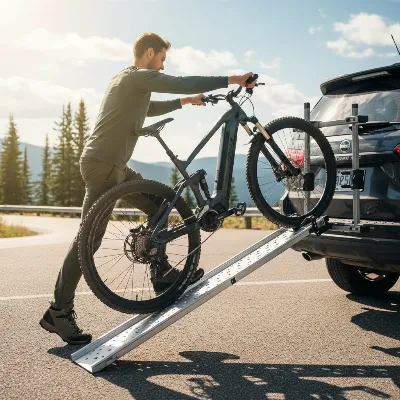 Person using a ramp to load a heavy e-bike onto a tall hitch rack safely
Securing Your E-Bike for the Journey
Once your e-bike is positioned on the rack, the next critical step is to secure it properly for safe transit. A well-secured e-bike will prevent movement, wobbling, and potential damage to the bike, the rack, or your vehicle, even over long distances or rough roads.
Platform hitch racks typically feature deep wheel cradles and robust wheel straps. Begin by fastening the straps tightly around both the front and rear wheels, ensuring they are snug but not overtightened, which could damage tires or spokes. These straps hold the wheels firmly in place within their trays, preventing lateral movement and bouncing.
Next, engage the rack’s frame clamps or arms. These clamps typically secure around the top tube or down tube of your e-bike’s frame. Be mindful of delicate components such as brake cables, hydraulic lines, or integrated battery covers when positioning the clamps to avoid damage. Some racks offer adjustable clamps that can be rotated to accommodate various frame shapes, including step-through designs. Many quality e-bike racks also incorporate an anti-wobble system, often a threaded hitch pin or bolt that tightens the rack within the receiver, significantly reducing sway during travel.
For an added layer of security, especially for expensive e-bikes or longer journeys, consider using additional tie-down straps or dedicated bike locks. High-quality cam buckle straps can be wrapped around the e-bike frame and rack for extra stability. Always use a sturdy U-lock or a high-quality chain lock to secure your e-bike frame to the hitch rack, discouraging theft. Avoid relying solely on integrated cable locks, as they are often easier to cut. If possible, lock both the frame and at least one wheel to the rack.
“Many assume that once an e-bike is on the rack, the job is done. But securing it meticulously, going beyond basic clamps, is what truly guarantees peace of mind on the road.” – Admin, ReviewRevise.com
Common Mistakes to Avoid
Even with the best intentions, certain missteps can compromise the safety of your e-bike during transport. Being aware of these common pitfalls can help you avoid costly damage or hazardous situations.
One of the most frequent errors is overloading the rack. E-bikes are heavy, and exceeding your rack’s specified weight capacity per bike or its total load limit can lead to structural failure of the rack, damage to your vehicle’s hitch, or even loss of your e-bike on the road. Always check both the rack and your vehicle’s tongue weight rating. If transporting multiple e-bikes, distribute the weight evenly, placing heavier bikes closer to the vehicle if your rack allows for such positioning.
Another critical mistake is neglecting pre-trip checks. Skipping the inspection of your hitch receiver, rack attachment points, or e-bike securing mechanisms before hitting the road is risky. Loose bolts, worn straps, or improperly seated bikes can lead to major issues. Make it a habit to perform a quick but thorough inspection every time you load your e-bike, giving the bike a firm shake to confirm its stability.
Finally, improper securing techniques can be detrimental. This includes not tightening straps sufficiently, clamping sensitive e-bike components (like carbon frames, battery housing, or brake lines), or failing to use anti-wobble features. Any movement or sway of the e-bike on the rack can cause chafing, scratches, or even bending of parts over time. Ensure all points of contact are protected with padding if necessary, and that the e-bike is snug, stable, and completely immobile within the rack’s embrace.
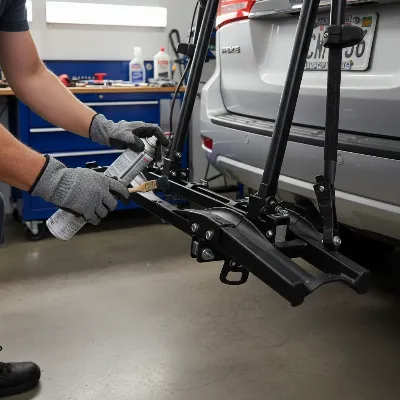 Person maintaining a hitch rack, cleaning moving parts
Maintenance and Care for Your Hitch Rack
Your tall hitch rack is a vital piece of equipment for your e-bike adventures, and like any tool, it requires regular maintenance to ensure its longevity and reliable performance. Proper care not only extends the life of your rack but also guarantees continued safety for your e-bikes.
Perform regular inspections of your hitch rack. Before and after each trip, especially longer ones, visually check for any signs of wear and tear, such as cracked welds, bent components, or rusted areas. Pay close attention to all bolts, pins, and locking mechanisms, ensuring they are tight and functioning correctly. Over time, road vibrations can cause bolts to loosen, so a monthly check with the appropriate wrench is a good practice. Inspect all straps and padding for fraying, tears, or excessive compression. Replace any damaged parts immediately.
Cleaning your rack is also essential, particularly after exposure to harsh weather conditions like rain, snow, or muddy roads. Road salt, dirt, and grime can accelerate corrosion and degrade moving parts. Use a mild soap and water solution to clean the rack, and rinse thoroughly. After cleaning, ensure all moving parts, such as hinges, folding arms, and locking mechanisms, are lubricated with a suitable grease or spray to prevent rust and ensure smooth operation.
When your hitch rack is not in use, proper storage can significantly extend its lifespan. If possible, remove the rack from your vehicle and store it indoors in a dry, covered area. This protects it from prolonged exposure to elements like direct sunlight, rain, and snow, which can cause material degradation and rust. If indoor storage isn’t feasible, consider using a durable, weather-resistant cover to protect the rack while it remains on your vehicle.
Conclusion
Loading an e-bike onto a tall hitch rack, while initially seeming daunting due to the bike’s weight and the rack’s height, becomes a straightforward and safe process with the right knowledge and techniques. By preparing your e-bike and rack meticulously, employing smart lifting strategies (including ramps or assistance when needed), and securing your bike with diligence, you can confidently transport your e-bike to any destination. Regular maintenance of your rack further guarantees its reliability for countless journeys to come. What adventures will you unlock by mastering the safe transport of your e-bike?
Frequently Asked Questions
Can I use a regular bike rack for my e-bike?
It is generally not recommended to use a regular bike rack for an e-bike. E-bikes are significantly heavier than traditional bikes, often exceeding the weight capacity of standard racks. Using an unsuitable rack can lead to rack failure, damage to your e-bike, or even accidents on the road. Always choose a hitch rack specifically designed for e-bikes with appropriate weight ratings.
How can I make lifting my heavy e-bike easier?
To make lifting easier, first remove the battery and any accessories from your e-bike to reduce its weight. Then, consider a “half-lift” technique by placing one wheel on the rack first, then lifting the other. Using a loading ramp, or a lift-assist device designed for e-bikes, can also eliminate manual lifting entirely, making the process much simpler and safer.
Should I remove the e-bike battery before transport?
Yes, it is highly recommended to remove the e-bike battery before transporting your bike on a rack. This significantly reduces the overall weight, making the bike easier and safer to lift. It also protects the battery from vibrations, extreme temperatures, and potential damage during transit. Store the battery securely inside your vehicle.
How do I prevent my e-bike from wobbling on the hitch rack?
To prevent wobbling, ensure your hitch rack has an anti-wobble feature, such as a threaded hitch pin or bolt that tightens the rack within the receiver. Make sure all wheel straps and frame clamps are securely fastened. For extra stability, consider using additional cam buckle straps to further secure the e-bike frame to the rack.
How often should I check my hitch rack for maintenance?
You should perform a visual inspection of your hitch rack before and after every trip. A more thorough maintenance check, including tightening bolts, lubricating moving parts, and inspecting for wear and tear, should be done monthly or every few trips, especially if you frequently travel on rough roads or in harsh weather conditions.
