There’s nothing quite like the freedom of taking your bikes on an adventure, but a wobbly hitch bike rack can quickly turn excitement into anxiety. The unsettling sway and rattle, especially at highway speeds, is not only annoying but a significant safety concern. A loose rack can damage your vehicle, your bikes, or even pose a hazard to other drivers. Fortunately, many common causes of hitch bike rack wobble are easily identifiable and fixable right in your driveway. With a few simple tools and a bit of know-how, you can restore stability and confidence to your bike transport system, ensuring your gear arrives safely and securely at your destination. This comprehensive guide will walk you through diagnosing the problem and implementing effective solutions to secure your hitch bike rack.
Popular Types of Hitch Bike Racks and Their Wobble Tendencies
Understanding how different hitch bike rack designs can contribute to wobble is the first step in diagnosing and fixing the issue. While the primary connection point to your vehicle’s hitch receiver is a universal source of potential play, various rack styles introduce unique vulnerabilities. Identifying your specific rack type helps in targeting the most effective solutions.
Platform Hitch Bike Racks
|
Our Picks for the Best Bike Rack in 2026
As an Amazon Associate I earn from qualifying purchases.
|
||
| Num | Product | Action |
|---|---|---|
| 1 | KUAT Sherpa 2.0 Durable Lightweight Aluminum Compact 2 Bike Transporting Hitch Rack with Cable Lock & Foldable Tire Cradles | Capacity - 40 Lbs per Tray |

|
| 2 | CyclingDeal Upright Bike Stand Floor - Vertical & Horizontal Bicycle Stand Bicycle Storage - Safe & Secure Bike Storage Rack - for Wheels Sizes up to 29" - Bike Rack Garage Bicycle Rack - Classic |
|
| 3 | CHEPARK Bike Floor Stand Rack- Indoor Bike Stand for Garage/Home - Bike Storage Bicycle Parking Rack Fit 20”-29” Mountain Road Bikes (1 Bike Rack) |
|
| 4 | Vertical Bike Parking Stand - Adjustable Height for 29"Wheels, Space-Saving & Freestanding Bike Rack for MTB/Road Bikes,No-Drill Installation Indoor Bike Storage for Apartments & Garages |
|
| 5 | Vertical Bike Stand, Upright Bike Parking Rack Floor, Adjustable Bicycle Storage for Wheels Sizes up to 29", Freestanding Bicycle Organizer with Swivel Casters, Indoor Bike Holder for Garage 2-Pack |
|
| 6 | Young Bike Rack Hitch for Car - 200LB 2-Bike Rack Hitch Mount Platform Style Hitch Bike Rack,Smart Tilting & Easy Fold for Car SUV with 2 Inch Receiver,Bike Carrier Fits Up to 5-inch Fat Tire |
|
| 7 | Allen Sports Deluxe 4-Bike Hitch Mount Rack (2-Inch Receiver) , Black |
|
| 8 | 2 Bikes Floor Stand,Adjustable Bicycle Parking Rack with Hook for Garage/Indoor/Outdoor,Metal Cycle Storage Organizer Rack for Road Bikes |
|
| 9 | monTEK Swivel Bike Wall Mount, Bike Hangers for Garage, Space-Saving Vertical Bike Rack, Sturdy Bike Storage Rack Holds Up to 66lbs, Easy to Install, 4 Pack |
|
| 10 | Vertical Bike Stand, Freestanding Bike Rack Garage Storage Upright Bicycle Floor Stand Indoor Bike Holder with Adjustable Height for Garage & Apartment - for Wheels Sizes up to 29” |
|
Platform hitch bike racks, often favored for their ease of loading and secure wheel-based attachment, are generally robust. They typically support bikes by their wheels, holding them in trays, which provides excellent stability for the bicycles themselves. However, the connection of the main mast to the hitch receiver is still the fundamental point where wobble can originate. While the trays and arms often have their own tightening mechanisms to secure bikes, ensuring the rack itself remains stable within the hitch is paramount. Wobble in platform racks often feels like the entire structure shifting side-to-side or tilting slightly. This can be due to a loose hitch pin, an oversized receiver, or insufficient anti-wobble features in the rack’s design. For compare top bike racks on this site.
Platform racks are designed for superior bike stability, reducing bike-on-bike contact and simplifying loading. Their construction usually involves fewer moving parts than hanging racks, but the connection at the hitch remains the primary area of focus for any instability. Regular inspection of the hitch interface and the main vertical mast connection points is crucial.
Hanging/Mast Style Hitch Bike Racks
Hanging or mast-style hitch bike racks suspend bikes by their top tubes using cradle arms extending from a central mast. These racks are often more compact when folded and can be lighter, but they can be more prone to sway, especially with multiple bikes loaded. The leverage created by bikes hanging further from the hitch receiver can amplify any play in the main hitch connection.
Wobble in these racks typically manifests as pronounced side-to-side swinging of the bikes and the rack’s arms. Beyond the hitch receiver connection, potential wobble points include the folding mechanism of the arms, the pivot point where the mast might tilt away from the vehicle for rear access, and the individual cradle adjustments. Each of these points, if not securely tightened or if worn, can introduce additional movement. The design often relies on a strong, rigid mast to transfer the load effectively, making any looseness at its base or within its folding joints a significant concern for overall stability.
Swing-Away or Tilting Hitch Bike Racks
For added convenience, some hitch bike racks incorporate swing-away or tilting features, allowing access to the vehicle’s rear cargo area without removing the bikes. These advanced designs, while incredibly practical, introduce additional pivot points into the rack’s structure. Each hinge or locking mechanism designed for swinging or tilting creates another potential source of play if not perfectly engineered or maintained.
A swing-away rack, for instance, has a primary pivot that allows the entire rack and bikes to rotate away from the vehicle. If the locking pin or mechanism securing this pivot is loose or worn, it can lead to noticeable lateral wobble. Similarly, tilting racks, which pivot downwards for rear access, rely on a robust latch or pin to hold them upright. Any play in these mechanisms will translate directly into rack instability. These types of racks require extra attention to all their moving parts, beyond just the hitch connection, to ensure every component is locked down securely.
The Hitch Connection: Universal Wobble Origins
Regardless of the rack style, the interface between the bike rack’s stinger (the part that inserts into the receiver) and the vehicle’s hitch receiver is the most common and critical source of wobble. This connection is designed to be universal, but manufacturing tolerances mean there’s almost always a small gap between the rack’s stinger and the receiver’s interior walls. This inherent play, even if minimal, can amplify into significant wobble and sway once bikes are loaded and the vehicle is in motion.
Key factors contributing to wobble at this universal connection point include:
- Loose Hitch Pin: The most basic cause; if the retaining pin or bolt isn’t fully tightened, it allows the rack to shift.
- Worn or Missing Anti-Wobble Hardware: Many racks come with integrated anti-wobble features (e.g., a threaded hitch pin that pulls the stinger against one side of the receiver). If these are damaged or not utilized, wobble will occur.
- Oversized Receiver: Sometimes, a vehicle’s receiver might be slightly larger than the rack’s stinger, increasing the gap.
- Worn Adapter Sleeves: Racks designed to fit both 1.25-inch and 2-inch receivers often use a plastic sleeve. Over time, these plastic sleeves can wear down, crack, or compress, creating significant play. This is a very common issue for racks with dual-receiver compatibility.
Addressing the wobble at the hitch connection is often the most impactful fix, as it provides the foundation for the entire rack’s stability.
Comparison of Wobble-Fixing Solutions for Hitch Bike Racks
When confronting a wobbly hitch bike rack, several effective solutions are available, each targeting different aspects of the instability. Understanding the pros and cons of these fixes can help you choose the best approach for your specific situation. From simple tightening to specialized accessories, the right solution depends on the source and severity of the wobble.
Detailed Comparison Table
This table compares common methods and devices used to eliminate or significantly reduce wobble in hitch bike racks.
| Feature | Hitch Tighteners (Anti-Rattle Devices) | Threaded Hitch Pins / Anti-Wobble Pins | Aluminum Adapters/Shims (for 1.25″ in 2″ receiver) | Internal Rack Component Tightening |
|---|---|---|---|---|
| Effectiveness | High; significantly reduces play at the hitch receiver | Moderate to High; improves hitch connection | High; eliminates play from worn plastic adapters | Varies; depends on specific loose component |
| Cost | Low to Moderate ($15-$40) | Low to Moderate ($10-$30) | Low ($10-$20) | Low (no cost if tools are available) |
| Ease of Installation | Moderate (requires wrenching, can be fiddly) | Easy (replaces existing pin, simple tightening) | Easy (replaces existing adapter, one screw) | Moderate (requires identifying loose parts) |
| Durability | High (metal construction) | High (steel construction) | High (aluminum) | N/A (restores original durability) |
| Target Wobble Source | Play between rack stinger and hitch receiver | Play between rack stinger and hitch receiver | Play from worn adapter in 2″ receiver | Loose parts within the rack’s structure |
| Best For | General hitch slack, significant receiver play | Racks designed for threaded pins, minor hitch play | Racks using a 1.25″ bar in a 2″ receiver | Racks with specific loose joints or pivots |
Buying Guide for Wobble-Fixing Accessories and Replacement Parts
Choosing the right solution to fix your wobbly hitch bike rack involves more than just picking a generic accessory. It requires a careful assessment of your specific needs, the nature of the wobble, and the factors that influence the effectiveness and longevity of the repair. Investing in the correct parts will ensure a stable and safe ride for your bikes.
Identifying the Wobble Source
Before purchasing any fixing accessory, the most crucial step is to accurately diagnose where the wobble originates. Is the entire rack swaying within the hitch receiver? Are only the bike arms or trays moving? Or is the wobble concentrated at a folding joint?
- Hitch Receiver Play: If the entire rack moves when you shake it at the hitch connection, a hitch tightener or a more effective hitch pin is likely needed.
- Adapter Play: If your 1.25-inch rack is used in a 2-inch receiver with a plastic adapter, inspect the adapter for wear, cracks, or compression. A new, solid aluminum adapter is often the best fix.
- Internal Rack Play: If the hitch connection is solid but parts of the rack (arms, trays, pivots, folding mechanisms) are loose, you’ll need to identify the specific bolts, pins, or adjustment knobs that need tightening or replacing.
- Number of Bikes: More bikes generally mean more leverage and potential for wobble. If you frequently carry a full load, a robust anti-wobble solution is essential.
- Frequency of Use: For occasional users, a basic hitch tightener might suffice. For daily commuters or frequent travelers, investing in higher-quality, permanent solutions is advisable.
- Budget: While most wobble-fixing accessories are affordable, consider the long-term value. A slightly more expensive, durable aluminum adapter or a well-regarded hitch tightener might save you hassle and money in the long run.
Factors to Consider When Selecting Wobble-Fixing Solutions
Once you’ve pinpointed the source of the wobble, consider these factors when selecting the appropriate fixing accessory:
- Material and Durability: Opt for heavy-duty steel or aluminum components. Plastic parts, especially for adapters, are prone to wear and compression over time. A robust material ensures the fix lasts.
- Compatibility:
- Hitch Size: Ensure any hitch tightener or anti-wobble pin matches your receiver size (1.25-inch or 2-inch).
- Rack Design: Some racks have proprietary anti-wobble designs (e.g., internally threaded stingers for specific bolts). Make sure any aftermarket part is compatible.
- Ease of Installation: Most solutions are designed for DIY installation. Look for products with clear instructions and minimal tool requirements.
- Load Capacity (for the solution): While not typically a listed spec for wobble reducers, a heavy-duty tightener or pin is always better for heavier loads of multiple bikes.
- Design (for hitch tighteners):
- U-Bolt Style: These are common and effective, using a U-bolt and plate to clamp the stinger to the receiver. They are universal but can sometimes be bulky.
- Wedge Style: Some tighteners use an expanding wedge inside the receiver or against the stinger to create pressure. These can be more discreet but might have specific compatibility requirements.
- Anti-Rattle Hitch Pins: These threaded bolts pull the rack’s stinger against the side of the receiver, eliminating play. Ensure your rack is designed to accept a threaded pin.
- Brand Reputation: While many generic options exist, reputable brands often offer better quality control and more robust designs.
Choosing the Right Wobble-Fixing Solution
Here are some suggestions based on common wobble scenarios:
- Scenario 1: General Play at the Hitch Receiver (no adapter involved).
- Solution: A hitch tightener (U-bolt or wedge style) is highly effective. Ensure it matches your hitch size.
- Alternative: If your rack uses a bolt instead of a simple pin, ensure it’s a threaded anti-wobble hitch pin and that it’s fully tightened. Consider upgrading to a locking threaded pin for security and wobble reduction.
- Scenario 2: Wobble due to a Worn 1.25″ to 2″ Plastic Adapter.
- Solution: Replace the plastic adapter with a solid aluminum hitch adapter sleeve. This provides a much more secure and durable fit within the 2-inch receiver.
- Scenario 3: Wobble within the Rack’s Arms, Trays, or Folding Joints.
- Solution: Inspect all bolts, nuts, and quick-release levers on the rack itself. Tighten any loose fasteners. For older racks, you might need to replace worn bushings or pins at pivot points if parts are available from the manufacturer.
- Scenario 4: You want the best possible stability from the start.
- Solution: Choose a hitch bike rack with integrated anti-wobble technology. Many premium brands incorporate advanced designs that minimize play from the factory. Even with these, a secondary hitch tightener can provide an extra layer of security for absolute peace of mind.
The best choice is the one that directly addresses the root cause of your rack’s wobble. A systematic approach to diagnosis and selection ensures you achieve the safest and most stable setup for transporting your bicycles.
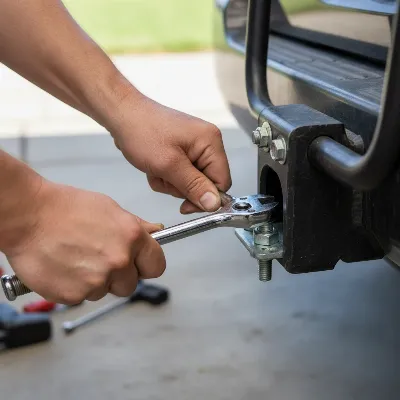 Man installing a hitch tightener on a vehicle's hitch receiver with a bike rack attached, ensuring it's tightened securely with a wrench, focused, outdoor setting, realistic style
Reputable Brands for Hitch Bike Racks and Anti-Wobble Solutions
When it comes to securing your bikes, the quality of your hitch bike rack and any accompanying anti-wobble accessories makes a significant difference. Reputable brands are known for their engineering, durability, and often, integrated features that contribute to a more stable ride. Choosing products from these manufacturers can provide peace of mind and long-lasting performance.
Introducing Brands with a Focus on Stability
Several brands stand out in the bike rack market, offering both complete rack systems and accessories designed to minimize wobble.
-
Thule & Yakima: These are two of the most well-known and respected names in the bike rack industry. They offer a wide range of hitch bike racks, including platform and hanging styles, often with sophisticated anti-wobble mechanisms built directly into their hitch stingers. Thule, for example, frequently uses its “Snug-Tite” receiver lock, which is a threaded pin designed to actively pull the rack tight within the hitch. Yakima also incorporates similar features in its premium hitch racks. While their products tend to be at a higher price point, their commitment to engineering and rigorous testing often translates to superior stability and durability.
-
Kuat: Kuat has quickly gained a reputation for stylish, high-quality, and feature-rich hitch bike racks. Their racks are often lauded for their robust construction and excellent anti-wobble designs, frequently featuring a camming system or threaded hitch pin that effectively eliminates play at the receiver. Kuat racks often come with a high degree of integration for stability, minimizing the need for aftermarket solutions.
-
Saris: Another established brand, Saris offers a variety of hitch racks known for their user-friendly designs. Many Saris hitch racks include integrated tightening mechanisms, often a threaded bolt system, to secure the rack firmly into the receiver. While some models might have minor inherent movement due to design choices (as noted in some product descriptions), the primary hitch connection is typically engineered for solid performance.
-
Curt & Master Lock (for accessories): While primarily known for trailer hitches and locks, brands like Curt and Master Lock are prominent providers of aftermarket anti-wobble devices. Curt offers a range of hitch tighteners, often featuring the robust U-bolt design, which are universal and highly effective for reducing receiver play in almost any hitch rack. Master Lock also produces hitch pins and locking devices that can offer improved security and a tighter fit compared to basic non-threaded pins. These brands are excellent sources for reliable, dedicated anti-wobble solutions.
-
Roadmaster & StowMaster: These brands are traditionally known for towing accessories and RV equipment, but they also produce high-quality hitch receivers and related components, including some of the most heavy-duty hitch tighteners available. Their products are often designed for extreme conditions and heavier loads, making them an excellent choice for maximum stability for bike racks, especially those carrying multiple or heavier electric bikes.
Notable Anti-Wobble Solutions and Features
Beyond just the brand of the rack, specific technologies and designs play a crucial role in preventing wobble:
-
Threaded Hitch Pins: Many premium racks, or aftermarket kits, utilize a threaded hitch pin that screws into a welded nut inside the rack’s stinger. As you tighten this bolt, it pulls the stinger against the inner wall of the receiver, effectively “camming” it into place and eliminating play. Always ensure the pin is fully tightened with a wrench, not just hand-tight.
-
Integrated Camming/Wedge Systems: Some high-end racks, particularly from Kuat and Thule, feature an internal cam or wedge system within the stinger that expands as you engage a knob or lever. This expansion presses against the inner walls of the receiver, creating a tight, wobble-free fit without external tools once initially installed.
-
U-Bolt Hitch Tighteners: These external devices are universal and work by clamping the outside of the hitch receiver around the rack’s stinger. A heavy-duty steel plate and U-bolt are tightened with nuts, pulling the stinger securely against one side of the receiver. They are highly effective, affordable, and compatible with most hitch receivers and racks.
-
Solid Aluminum Hitch Adapters: For 1.25-inch bike rack stingers used in 2-inch vehicle receivers, replacing a flimsy plastic adapter with a solid aluminum sleeve is a major upgrade. These solid metal adapters fill the void precisely, preventing the common sag and wobble associated with worn plastic versions. They offer superior durability and a much tighter fit.
When selecting a rack or an anti-wobble accessory, always check product reviews and compatibility specifications to ensure it meets your vehicle’s hitch size and your specific rack’s design. Prioritizing quality and features designed for stability will lead to a safer and more enjoyable experience transporting your bikes.
Conclusion
A wobbly hitch bike rack is more than just an annoyance; it’s a clear indication that your precious cargo isn’t as secure as it should be. Addressing this instability is crucial for the safety of your bicycles, your vehicle, and everyone else on the road. By systematically identifying the source of the wobble—whether it’s a loose hitch pin, worn adapter, or play within the rack’s components—you can implement effective, home-based solutions. From the simple act of tightening bolts to installing a dedicated hitch tightener or upgrading to a durable aluminum adapter, restoring stability is often straightforward.
Investing a little time and effort into securing your hitch bike rack ensures that your adventures begin and end with peace of mind. A stable rack protects your equipment and transforms your travel experience, allowing you to focus on the journey and the joy of cycling rather than worrying about your bikes. Don’t let a minor wobble escalate into a major problem; take action today for a safer tomorrow. What steps will you take to ensure your hitch bike rack is rock-solid for your next ride?
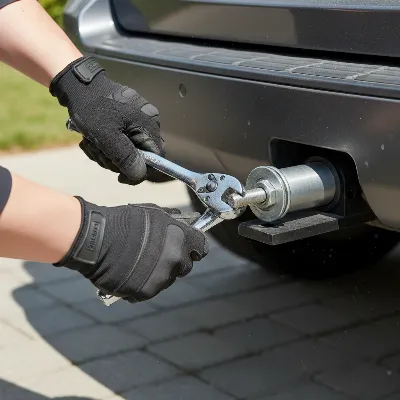 Person using a wrench to tighten a threaded hitch pin on a bike rack inserted into a vehicle's hitch receiver, with a focus on the connection point and a visible aluminum adapter, clear sunlight, practical, informative style
Frequently Asked Questions
Is some wobble normal for a hitch bike rack?
A minimal amount of vertical movement can be normal and is sometimes designed into the rack to absorb road vibrations, acting as a “shock absorber.” However, significant side-to-side or excessive vertical sway is not normal and indicates a problem that needs to be addressed for safety. A properly secured hitch bike rack should feel mostly stable with little to no noticeable lateral play.
When should I replace my hitch bike rack instead of fixing it?
You should consider replacing your hitch bike rack if key structural components are bent, cracked, or severely rusted, or if critical pivot points have excessive play that cannot be tightened or repaired. If the rack’s frame or attachment points are compromised, or if replacement parts for a significant issue are unavailable, replacing the rack is the safest option.
Can I use any hitch tightener with my bike rack?
Most U-bolt style hitch tighteners are universal and compatible with both 1.25-inch and 2-inch hitch receivers, as they clamp around the outside. However, some wedge-style tighteners or proprietary anti-wobble pins may have specific compatibility requirements with the rack’s stinger or the receiver’s interior. Always check the product’s specifications to ensure it matches your hitch size and rack design.
How often should I check my bike rack for wobble?
It’s recommended to check your bike rack for wobble every time you install it and before each trip, especially longer journeys. Thule suggests checking and re-tightening the rack’s connection every 200 miles during extended travel. Regular inspection of all bolts, pins, and connections will help identify potential issues before they become significant problems.
Are locking hitch pins also anti-wobble pins?
Not always. Many locking hitch pins are simple, non-threaded pins designed only for security against theft. True anti-wobble pins are typically threaded bolts that screw into the rack’s stinger, pulling it tightly against the receiver wall to eliminate play. Some manufacturers offer locking threaded hitch pins that combine both anti-wobble functionality and security, providing the best of both worlds.
