There’s nothing quite as unsettling as watching your precious bikes sway precariously behind your vehicle when cruising down the highway. That constant shifting can quickly turn a relaxing road trip into a nerve-wracking ordeal, leaving you to wonder if your gear is truly safe. Beyond the anxiety, excessive bike rack movement can pose a significant safety risk, potentially damaging your bikes, your vehicle, or even creating a hazard for others on the road. Fortunately, preventing this unsettling wobble is often simpler than you might think. With the right techniques, accessories, and a keen eye for detail, you can ensure your bikes remain steadfast and secure, allowing you to enjoy your journey with complete peace of mind.
Understanding Bike Rack Sway: Why It Happens
Before tackling the solutions, it’s essential to understand the common culprits behind bike rack sway. Identifying the root cause will help you apply the most effective remedies.
Loose Hitch Connection
|
Our Picks for the Best Bike Rack in 2026
As an Amazon Associate I earn from qualifying purchases.
|
||
| Num | Product | Action |
|---|---|---|
| 1 | Vertical Bike Parking Stand - Adjustable Height for 29"Wheels, Space-Saving & Freestanding Bike Rack for MTB/Road Bikes,No-Drill Installation Indoor Bike Storage for Apartments & Garages |

|
| 2 | Vertical Bike Stand, Freestanding Bike Rack Garage Storage Upright Bicycle Floor Stand Indoor Bike Holder with Adjustable Height for Garage & Apartment - for Wheels Sizes up to 29” |
|
| 3 | monTEK Swivel Bike Wall Mount, Bike Hangers for Garage, Space-Saving Vertical Bike Rack, Sturdy Bike Storage Rack Holds Up to 66lbs, Easy to Install, 4 Pack |
|
| 4 | 2 Bikes Floor Stand,Adjustable Bicycle Parking Rack with Hook for Garage/Indoor/Outdoor,Metal Cycle Storage Organizer Rack for Road Bikes |
|
| 5 | Allen Sports Deluxe 4-Bike Hitch Mount Rack (2-Inch Receiver) , Black |
|
| 6 | KUAT Sherpa 2.0 Durable Lightweight Aluminum Compact 2 Bike Transporting Hitch Rack with Cable Lock & Foldable Tire Cradles | Capacity - 40 Lbs per Tray |
|
| 7 | Young Bike Rack Hitch for Car - 200LB 2-Bike Rack Hitch Mount Platform Style Hitch Bike Rack,Smart Tilting & Easy Fold for Car SUV with 2 Inch Receiver,Bike Carrier Fits Up to 5-inch Fat Tire |
|
| 8 | Vertical Bike Stand, Upright Bike Parking Rack Floor, Adjustable Bicycle Storage for Wheels Sizes up to 29", Freestanding Bicycle Organizer with Swivel Casters, Indoor Bike Holder for Garage 2-Pack |
|
| 9 | CHEPARK Bike Floor Stand Rack- Indoor Bike Stand for Garage/Home - Bike Storage Bicycle Parking Rack Fit 20”-29” Mountain Road Bikes (1 Bike Rack) |
|
| 10 | CyclingDeal Upright Bike Stand Floor - Vertical & Horizontal Bicycle Stand Bicycle Storage - Safe & Secure Bike Storage Rack - for Wheels Sizes up to 29" - Bike Rack Garage Bicycle Rack - Classic |
|
For hitch-mounted bike racks, the most frequent source of instability is play between the rack’s receiver tube and your vehicle’s hitch receiver. Even a millimeter of gap can translate into significant wobble at the end of a long rack arm, especially at highway speeds or over uneven terrain. This looseness can stem from mismatched sizes, wear in the hitch components, or simply inadequate tightening during installation. For shop curated bike racks on this site.
Improper Bike Loading and Securement
The way bikes are loaded and secured plays a crucial role in overall stability. Bikes that are too heavy for the rack’s capacity, loaded unevenly, or not firmly strapped down can create a dynamic, shifting load that exacerbates sway. Loose wheels, handlebars, or pedals can also contribute to unwanted movement, increasing the forces on the rack itself.
Rack Design and Wear
Not all bike racks are created equal. Some entry-level racks may have more inherent flex or simpler attachment mechanisms that are prone to movement. Over time, components can wear out, bolts can loosen, and plastic parts can become brittle, all contributing to increased sway. Racks with multiple pivot points (like those that fold or tilt) can also introduce more potential points of movement if not properly secured.
Vehicle Dynamics and Highway Speeds
The physics of driving at highway speeds inherently introduce forces that can make a bike rack sway. Wind resistance, road imperfections, sharp turns, and sudden braking all put stress on your rack and its attachment points. A stable setup minimizes the impact of these forces, but an unstable one will amplify them.
Stopping Sway in Hitch-Mounted Bike Racks
Hitch-mounted racks are highly popular for their capacity and ease of use, but they are also the most common type to experience sway. Here’s how to lock them down.
The Power of Hitch Tighteners (Anti-Wobble Devices)
A hitch tightener, also known as an anti-rattle device or hitch clamp, is arguably the most effective solution for eliminating play between your bike rack and the vehicle’s hitch receiver. These ingenious accessories work by applying pressure to the connection, essentially clamping the rack’s stinger tightly within the hitch.
Most designs involve a U-bolt and a steel plate that compresses the hitch shank against the inside of the receiver tube. Others utilize a threaded hitch pin that pulls the rack tightly against one side of the receiver. When properly installed and tightened, these devices can make a dramatic difference, turning a wobbly rack into a rock-solid extension of your vehicle.
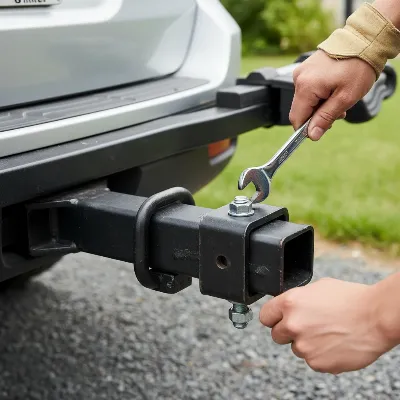 A person installing a U-bolt style hitch tightener on a vehicle's hitch receiver to secure a bike rack and prevent swaying on the highway.
To install, simply slide the U-bolt around the bottom of the hitch receiver, position the tightening plate over the rack’s shank, and then thread and tighten the nuts until all movement is eliminated. It’s a small, affordable investment that yields immense stability benefits.
Ensuring a Snug Hitch Fit
Even without a dedicated tightener, you can significantly improve the fit of your hitch-mounted rack.
- Correct Receiver Size: Always ensure your bike rack is designed for your specific hitch receiver size (e.g., 1.25-inch or 2-inch). Using an adapter can introduce additional play, so it’s best to minimize their use if possible.
- Shims: For slight gaps, shims can be a simple, temporary fix. Wrapping a few layers of duct tape around the rack’s hitch tube where it inserts into the receiver can take up slack. More permanent solutions might involve metal shims designed for this purpose. However, be cautious not to create an overly tight fit that could damage either component.
- Proper Tightening Technique: When installing the rack, fully insert it into the receiver. Have a second person push the rack towards the vehicle and slightly upwards while you tighten the hitch pin. This compresses the components and helps remove initial play. Re-tighten after a short drive to ensure everything is settled.
Securely Loading Your Bikes
The bikes themselves can be a major source of sway if not properly secured.
- Anti-Sway Cradles and Frame Straps: Many modern hitch racks come with integrated anti-sway cradles or additional straps that secure the bike’s frame to the rack mast. These prevent bikes from rocking side-to-side or front-to-back against each other or the rack.
- Wheel Straps: Always secure the wheels. Loose wheels can spin or flap, adding instability. Use the provided wheel straps, bungee cords, or Velcro straps to bind them firmly to the rack trays.
- Preventing Pedal/Handlebar Movement: Bikes on hanging-style racks can have their pedals or handlebars move. Use SoftWraps or similar straps to bind a pedal or crank arm to the rack’s upright mast. This creates a crucial third point of contact, dramatically reducing bike movement. Padding can be used to prevent contact and protect finishes.
- Weight Distribution: For multiple bikes, try to load the heaviest bike closest to the vehicle. Distribute weight evenly across the rack and avoid overloading.
Regular Maintenance and Inspection
A well-maintained rack is a stable rack. Before every trip, especially long highway journeys, perform a thorough inspection:
- Check all bolts, pins, and tightening knobs on the rack itself for looseness.
- Inspect straps for wear and tear, replacing any that show signs of fraying or damage.
- Ensure the hitch receiver and pin are free of corrosion or damage.
Minimizing Sway in Trunk-Mounted Bike Racks
Trunk-mounted racks, while convenient, require diligent attention to detail to prevent sway. Since they rely on straps and hooks, ensuring proper tension is paramount.
Achieving Optimal Strap Tension
The key to a stable trunk rack is balanced and firm strap tension. All straps must be tightened securely, but not excessively, to avoid damaging your vehicle or the rack. Start by hooking all straps in their correct positions (typically top, side, and bottom of the trunk or hatch). Then, tighten them incrementally and evenly, ensuring the rack is centered and pressed firmly against the vehicle. Regularly check tension during the first few miles of driving and re-tighten as needed.
Utilizing Anti-Sway Cradles and Straps
Many trunk racks come with integrated anti-sway cradles, similar to those found on hitch racks, which help stabilize the bike frame. Always use these as intended. Employ extra frame straps or bungee cords to tie down the bike frame more directly to the rack’s support arms. This minimizes independent movement of the bike on the rack, which can otherwise transfer motion to the entire setup.
Securing Front Wheels and Loose Components
Loose front wheels on a trunk rack are a primary source of unwanted motion. Use the provided wheel straps, or acquire aftermarket Velcro straps or bungee cords, to firmly secure the front wheel to the bike’s frame or the rack arm. This prevents the wheel from spinning or flapping, which can create significant drag and leverage, leading to sway. Also, ensure any loose accessories like water bottles, pumps, or saddlebags are removed or secured to prevent them from bouncing around.
Preventing Wobble in Roof-Mounted Bike Racks
Roof-mounted racks are generally quite stable due to their fixed position on crossbars, but they too can experience wobble if not properly installed and maintained.
Crossbar and Rack Mount Stability
The foundation of a stable roof rack is your vehicle’s crossbars. Ensure they are correctly installed and tightened to the vehicle’s roof rails or direct mounts according to the manufacturer’s instructions. Any play in the crossbars will directly translate to the bike rack. Once the crossbars are secure, firmly attach the bike trays or fork mounts to them. Double-check all mounting bolts and clamps to ensure they are tight and free of movement.
Bike Tray and Fork Mount Security
Most roof racks either clamp onto the bike’s downtube or secure the fork after removing the front wheel.
- Fork-Mounted Trays: These are often the most stable option as they rigidly hold the bike by its strongest point. Ensure the quick-release or thru-axle mechanism is fully tightened, and the rear wheel strap is snug.
- Upright (Frame-Clamping) Mounts: If using an upright mount, ensure the clamping arm firmly grips the bike frame without crushing it. Check that the tire trays and straps secure both wheels tightly. Some movement can still occur, but it should be minimal.
Checking All Contact Points
Before hitting the highway, pull on your bike in all directions to identify any potential sources of movement. Tighten any loose screws, clamps, or straps. Visually inspect for any wear or fatigue in the rack components that could compromise stability. A small piece of PVC pipe or even a bungee cord between seat posts can help stiffen up multiple bikes on upright mounts, reducing side-to-side sway.
General Best Practices for a Stable Ride
Beyond specific rack types, several universal practices contribute to a sway-free experience.
Pre-Trip Safety Checks
Make a habit of performing a comprehensive safety check before every journey:
- Rock the Rack: Grab the entire bike rack and try to shake it. There should be minimal movement at the connection point to your vehicle.
- Shake Each Bike: Individually check each bike on the rack. It should be firmly held with no excessive play.
- Check All Straps and Bolts: Confirm that every strap is taut, every bolt is tight, and every pin is secured.
- Test Brakes and Lights: If the rack obstructs your vehicle’s tail lights or license plate, ensure any auxiliary lighting or plate relocation is properly installed and functioning.
Mindful Driving Habits
Even the most secure rack can be stressed by aggressive driving.
- Smooth Acceleration and Braking: Avoid sudden starts and stops. Gradual acceleration and braking minimize inertial forces on the bikes and rack.
- Gentle Turns: Take corners and curves at reduced speeds to prevent excessive centrifugal forces from pushing your bikes sideways.
- Maintain Safe Following Distance: This allows more time for gradual maneuvers and reduces the need for abrupt braking.
- Reduce Speed on Rough Roads: Bumps and potholes are a significant source of movement. Slow down considerably when encountering uneven pavement.
Investing in Quality Gear
While not always feasible, a higher-quality bike rack often comes with superior anti-sway features, more robust materials, and better design. Look for racks with integrated anti-wobble mechanisms in the hitch, stronger frame clamps, and durable strap materials. These investments can save you headaches and potential damage down the road.
“A stable bike rack isn’t just about protecting your gear; it’s about road safety for everyone. The small effort you put into securing your bikes properly pays dividends in peace of mind and accident prevention.” – Dr. Elena Petrova, Automotive Safety Engineer
Conclusion
The unsettling sway of a bike rack on the highway doesn’t have to be an accepted part of your cycling adventures. By understanding the common causes—from loose hitch connections to improper bike loading—and implementing targeted solutions, you can significantly enhance stability. Whether you utilize hitch tighteners, optimize strap tension on a trunk rack, or ensure robust mounting for a roof system, diligence is key. Regular pre-trip inspections, coupled with mindful driving habits and an investment in quality equipment, will help guarantee your bikes arrive safely and securely, ready for your next ride. What steps will you take today to ensure your bike rack is rock-solid for your next journey?
Frequently Asked Questions
Is some bike rack wobble normal?
A very small amount of vertical movement might be inherent in some hitch rack designs, acting as a “shock absorber.” However, excessive horizontal swaying or bouncing is undesirable and should be addressed to prevent damage and ensure safety.
Can a loose bike rack damage my car?
Yes, excessive sway can cause the bike rack or bikes to repeatedly hit your vehicle’s bumper or paint, leading to scratches, dents, or more significant structural damage over time.
How often should I check my bike rack’s tightness?
It’s recommended to check the tension of your bike rack and bike securement straps before every trip. For longer journeys, re-check tension every 100-200 miles, especially after the first hour of driving, as components can settle.
Can I use bungee cords instead of proper straps?
While bungee cords can offer some restraint, they are generally not recommended as the primary means of securing bikes or racks due to their elasticity and potential for failure. Always prioritize manufacturer-provided straps and anti-sway devices. Bungees can be used as supplementary restraint for loose components after primary securement.
Do heavier bikes cause more sway?
Yes, heavier bikes can amplify sway, especially on racks that extend far from the vehicle’s hitch or roof. The increased mass creates more leverage and inertial force, making it crucial to ensure the rack’s capacity is not exceeded and that bikes are secured extra firmly.
What is an integrated anti-wobble system?
Some premium hitch bike racks come with an internal anti-wobble mechanism, often a threaded hitch pin or an expanding wedge, that tightens the rack stinger inside the receiver, eliminating play without needing an external hitch tightener.
Should I remove my bike rack when not in use?
Removing your bike rack when not in use is generally a good practice. It reduces wind drag (improving fuel economy), prevents wear and tear from road grime and weather, and removes the temptation for theft, prolonging the rack’s lifespan and maintaining its stability.
