Vertical bike racks are an increasingly popular and effective solution for storing and transporting mountain bikes, offering superior space efficiency and security compared to traditional horizontal racks. These racks orient bikes upright, significantly reducing their footprint whether in a garage, apartment, or on a vehicle. For instance, the Thule ReVert vertical hitch rack can transport up to six mountain bikes with a total capacity of 250 lbs, providing excellent ground clearance for rugged terrain.
The market for vertical bike racks offers innovative designs tailored to mountain bikers’ specific needs, including robust carriers for shuttle days, compact garage solutions, or sleek apartment displays. Understanding the different types and their unique advantages is crucial for selecting the best option. This guide explores various vertical bike rack options, compares their features, provides a detailed buying guide, and highlights top brands and models for mountain bikes.
Types of Vertical Bike Racks
Vertical bike racks maximize space by orienting your bicycle upright, typically using either a wheel or frame retention system. This vertical orientation significantly reduces the footprint a bike occupies, whether in your home, garage, or on your vehicle.
Ceiling Mount Vertical Bike Rack
|
Our Picks for the Best Bike Rack in 2026
As an Amazon Associate I earn from qualifying purchases.
|
||
| Num | Product | Action |
|---|---|---|
| 1 | KUAT Sherpa 2.0 Durable Lightweight Aluminum Compact 2 Bike Transporting Hitch Rack with Cable Lock & Foldable Tire Cradles | Capacity - 40 Lbs per Tray |

|
| 2 | Vertical Bike Stand, Freestanding Bike Rack Garage Storage Upright Bicycle Floor Stand Indoor Bike Holder with Adjustable Height for Garage & Apartment - for Wheels Sizes up to 29” |
|
| 3 | Young Bike Rack Hitch for Car - 200LB 2-Bike Rack Hitch Mount Platform Style Hitch Bike Rack,Smart Tilting & Easy Fold for Car SUV with 2 Inch Receiver,Bike Carrier Fits Up to 5-inch Fat Tire |
|
| 4 | monTEK Swivel Bike Wall Mount, Bike Hangers for Garage, Space-Saving Vertical Bike Rack, Sturdy Bike Storage Rack Holds Up to 66lbs, Easy to Install, 4 Pack |
|
| 5 | CyclingDeal Upright Bike Stand Floor - Vertical & Horizontal Bicycle Stand Bicycle Storage - Safe & Secure Bike Storage Rack - for Wheels Sizes up to 29" - Bike Rack Garage Bicycle Rack - Classic |
|
| 6 | CHEPARK Bike Floor Stand Rack- Indoor Bike Stand for Garage/Home - Bike Storage Bicycle Parking Rack Fit 20”-29” Mountain Road Bikes (1 Bike Rack) |
|
| 7 | 2 Bikes Floor Stand,Adjustable Bicycle Parking Rack with Hook for Garage/Indoor/Outdoor,Metal Cycle Storage Organizer Rack for Road Bikes |
|
| 8 | Vertical Bike Stand, Upright Bike Parking Rack Floor, Adjustable Bicycle Storage for Wheels Sizes up to 29", Freestanding Bicycle Organizer with Swivel Casters, Indoor Bike Holder for Garage 2-Pack |
|
| 9 | Allen Sports Deluxe 4-Bike Hitch Mount Rack (2-Inch Receiver) , Black |
|
| 10 | Vertical Bike Parking Stand - Adjustable Height for 29"Wheels, Space-Saving & Freestanding Bike Rack for MTB/Road Bikes,No-Drill Installation Indoor Bike Storage for Apartments & Garages |
|
Ceiling mount vertical bike racks utilize overhead space, getting bikes completely off the floor and walls. These systems typically consist of hooks or cradles that suspend bikes by their wheels from the ceiling. They are an excellent solution for spaces with high ceilings, such as garages or workshops, where horizontal wall space is limited.
The primary advantage of ceiling mounts is their unparalleled ability to free up floor and wall space, making your area feel less cluttered and more organized. Many models, like the G-Bike Ceiling Rack, offer adjustable storage hooks and can accommodate multiple bikes, sometimes up to eight, by allowing you to customize the setup to your specific bike dimensions. While they require a sturdy ceiling for installation and some lifting to get the bike into position, they are a superb choice for long-term storage and maintaining a minimalist aesthetic.
Wall Mount Vertical Bike Rack
Wall-mounted vertical bike racks are perhaps the most common solution for home and garage storage. They secure your bike perpendicular to the wall, typically by cradling one of the wheels or suspending it from a hook. These racks are ideal for optimizing space in smaller garages, apartments, or any area where floor space is at a premium.
There are generally two sub-types: direct wall mounts and strut (track) wall mounts. Direct wall mounts offer maximum flexibility in placement and are often the most cost-effective, requiring individual mounting for each rack. Strut wall mounts, on the other hand, feature a horizontal track that allows you to reposition bike racks without drilling new holes, offering greater adaptability for changing storage needs. Brands like Steadyrack specialize in these, offering models like the Steadyrack Mountain Bike Wall Rack, which features a unique swivel design. This allows you to pivot the bike against the wall when not in use, further saving space. Feedback Sports Velo Wall Post is another simple yet durable option. When choosing a wall mount, consider your wall’s strength, as it needs to support the combined weight of the rack and your mountain bike, especially heavier e-MTBs.
Freestanding Vertical Bike Rack
Freestanding vertical bike racks offer immense versatility as they do not require any drilling into walls or ceilings. These racks have a stable base that supports the bike in an upright position. They are a popular choice for renters, or in spaces where drilling isn’t feasible or desired, such as shared living areas or showrooms.
Many freestanding models can hold multiple bikes, with some designs accommodating up to five bikes in a surprisingly compact footprint. The G-Bike Freestanding Rack and CycleStand Pro are examples that provide stable, topple-resistant solutions. For single bikes, the Bike Nook Bicycle Stand offers a unique “no-lift” tilt-and-roll loading mechanism, supporting the bike by the rear wheel and seatpost. While generally taking up more floor space than a wall-mounted single rack, their portability and ease of setup are significant advantages. They are also great for temporary storage outdoors or in areas where flexibility is key.
Vertical Hitch Bike Rack
Vertical hitch bike racks are designed for vehicle transport, attaching to your car’s hitch receiver and holding bikes in an upright, vertical orientation behind the vehicle. These racks have become increasingly popular with mountain bikers, especially for shuttling multiple bikes to trailheads or transporting large groups.
“Vertical hitch racks are a game-changer for mountain bikers, particularly those with a fleet of bikes or heavy e-MTBs,” states Sarah Jenkins, a lead product tester at TrailBlazer Reviews. “Their capacity and ground clearance make them ideal for navigating rugged access roads.”
A key advantage of vertical hitch racks is their high capacity; some models, like the Alta Superior Ocho, can transport up to eight mountain bikes simultaneously. This upright design often provides better ground clearance compared to platform-style racks, making them suitable for off-road travel and preventing damage on uneven terrain. Brands like Alta Racks and VelociRAX are highly regarded in this category. For instance, the Thule ReVert is designed to carry up to six bikes with a total capacity of 250 lbs, making it an excellent choice for full-suspension mountain bikes. Loading is often easier with these racks, as you typically lift the bike less than with horizontal hanging racks. They also minimize bike-to-bike contact, reducing the risk of scratches during transit.
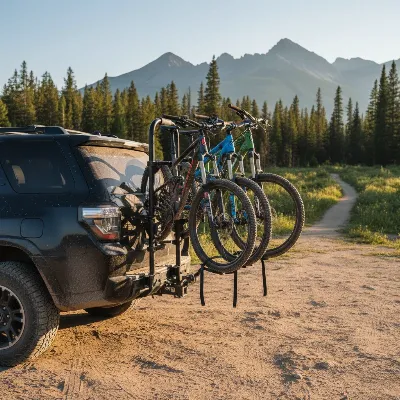 A vertical hitch bike rack securely holding several mountain bikes on the back of an SUV, with a scenic mountain trail in the background. The bikes are oriented vertically, showing good ground clearance.
Comparing Vertical Bike Racks
Choosing the best vertical bike rack for your mountain bike involves weighing the pros and cons of each type against your specific needs. The table below provides a detailed comparison to help you make an informed decision.
Detailed Comparison Table
| Feature | Vertical Hitch Rack | Wall Mount Rack | Freestanding Rack | Ceiling Mount Rack |
|---|---|---|---|---|
| Primary Use | Vehicle transport (shuttling, travel) | Home/garage storage, space-saving | Home/garage storage, portability, no drilling | Long-term storage, maximizing floor/wall space |
| Capacity (Bikes) | 2 to 8 bikes (e.g., Alta Racks, VelociRAX, Thule ReVert) | 1 to multiple (depending on wall length/design) | 1 to 5 bikes (e.g., G-Bike Freestanding) | 1 to 8 bikes (e.g., G-Bike Ceiling Rack) |
| Installation | Attaches to vehicle’s hitch receiver (tool-free options) | Requires drilling into wall studs (direct or track) | No installation, self-supporting | Requires drilling into ceiling joists |
| Frame Contact | Minimal to none (tire-only contact is common) | Typically none (holds by wheel) | Minimal to none (holds by wheel/seatpost) | Minimal to none (holds by wheel) |
| Tire Width Comp. | Excellent (designed for wide MTB/fat tires) | Good (models like Steadyrack MTB/Fat accommodate wide) | Good (up to 2.5″ – 5″ depending on model) | Good (most accommodate typical MTB tire widths) |
| Ground Clearance | Excellent (bikes ride high) | N/A (stationary storage) | N/A (stationary storage) | N/A (stationary storage) |
| Ease of Loading | Generally easy (some roll-in/lift-assist) | Moderate (requires lifting bike onto rack) | Easy (some tilt-and-roll, minimal lifting) | Moderate to difficult (requires lifting bike high) |
| Space Efficiency | Reduces vehicle overhang, vertical profile | Excellent (frees up floor space) | Good (compact footprint for multiple bikes) | Best (clears all floor/wall space) |
| Typical Price Range | High ($500 – $1500+) | Low to Moderate ($50 – $300) | Moderate ($100 – $400) | Low to Moderate ($50 – $250) |
Vertical Bike Rack Buying Guide
Selecting the perfect vertical bike rack for your mountain bike requires careful consideration of several factors. By evaluating your specific needs and the features of different racks, you can ensure you make a choice that serves you well for years to come.
Determine Your Usage Needs
Before diving into specifications, clearly define how you intend to use the rack.
- Number of Bikes: Are you storing a single bike or a family’s worth of mountain bikes? Vertical hitch racks excel for multi-bike transport, while wall mounts can be staggered for several bikes in a garage.
- Location: Will the rack be for vehicle transport, garage storage, a small apartment, or an outdoor shed? This will immediately narrow down your options to hitch, wall, freestanding, or ceiling mounts.
- Bike Type: Do you have standard mountain bikes, heavy e-MTBs, full-suspension rigs, or bikes with exceptionally wide “fat” tires? Ensure the rack’s weight capacity and tire compatibility are suitable.
- Budget: Set a realistic budget. High-capacity hitch racks represent a significant investment, while basic wall mounts are much more affordable.
Essential Factors to Consider
Once you’ve identified your basic needs, look closer at these critical features:
- Material and Durability: Mountain biking often involves rugged environments, so your rack needs to withstand the elements and heavy use. Look for racks made from high-grade steel or aluminum, with robust welds and powder-coated finishes for corrosion resistance. For hitch racks, heavy-duty construction is paramount for stability on bumpy roads.
- Weight Capacity: This is crucial, especially for modern mountain bikes and e-MTBs, which can weigh upwards of 50-60 lbs (23-27 kg) per bike. Check both the per-bike weight limit and the total rack capacity. An underrated rack can lead to damage or safety hazards.
- Bike Compatibility:
- Tire Width: Mountain bike tires range from standard 2.2-inch widths to 5-inch fat bike tires. Ensure the rack’s wheel cradles or hooks can accommodate your tire size. Companies like Steadyrack offer specific “MTB” and “Fat Rack” models for different widths.
- Wheel Diameter: Most vertical racks are compatible with 26″, 27.5″, and 29″ wheels, but always double-check.
- Fender/Mudguard Compatibility: Some wall mounts or even hitch racks may interfere with fenders. If your mountain bike has fixed mudguards, look for racks specifically designed to be fender-friendly, such as Steadyrack’s ProFlex range.
- Frame Contact: Many high-end mountain bikers prefer racks that only contact the tires to protect expensive carbon frames or delicate paint jobs. Vertical racks often excel here, with tire-only retention systems being common.
- Ease of Use:
- Loading and Unloading: How easy is it to get your heavy mountain bike onto and off the rack? Look for features like roll-in/roll-out loading, hydraulic lift assists, or tilt functions that simplify the process.
- Installation and Removal: For hitch racks, tool-free installation and quick-release mechanisms are a plus. For wall mounts, consider the complexity of initial setup.
- Adjustability: Can the rack be adjusted to fit different bike sizes, or to stagger bikes to prevent handlebar clash?
- Space Efficiency and Clearance:
- Footprint: How much floor or wall space will the rack truly save? Swivel features on wall mounts or compact freestanding designs can be advantageous.
- Ground Clearance (for hitch racks): If you drive on unpaved roads or steep driveways, high ground clearance is essential to prevent the rack and bikes from scraping.
- Tailgate/Rear Access (for hitch racks): Does the rack allow you to open your vehicle’s tailgate or rear doors without removing the bikes? Tilt-away or swing-away features are invaluable.
- Security Features: For vehicle racks, integrated locking systems (cable locks, hitch pin locks) are vital to deter theft. For home storage, consider racks that allow for the addition of your own locks.
Choosing the Right Rack for Your Mountain Bike
- For Shuttling & Group Rides: A high-capacity vertical hitch rack from Alta Racks or VelociRAX is likely your best bet. Prioritize maximum bike capacity, robust construction for off-road durability, and good ground clearance.
- For Garage Organization: Steadyrack wall mounts offer excellent space-saving with their swivel feature and specific mountain bike models. If you prefer no drilling, a multi-bike Freestanding G-Bike Rack could be ideal.
- For Limited Apartment Space: A sleek Steadyrack wall mount that tucks the bike away, or a compact single Bike Nook Bicycle Stand, can help keep your living area tidy.
- For Heavy E-MTBs: Focus on racks with high individual bike weight capacities and a sturdy, frame-safe attachment method, such as the Alta Racks E-dub specific models.
Reputable Vertical Bike Rack Brands
When investing in a vertical bike rack for your mountain bike, choosing a reputable brand known for quality and durability is paramount. Several manufacturers stand out in the market.
Brand Overviews and Featured Models
-
Alta Racks:
- Overview: Alta Racks is a highly regarded name, particularly for its vertical hitch-mounted bike racks. They are celebrated for their “bomb-proof” construction, high carrying capacity, and exceptional durability, often described as “built like a tank” by users. Their racks are designed to handle the rigors of mountain biking, including heavy full-suspension and e-bikes, with precision and stability.
- Featured Models: The Alta Superior Ocho is a standout, offering an impressive capacity to transport up to eight mountain bikes. They also offer specialized models like the E-dub series, specifically engineered to securely carry heavier e-bikes with reinforced components. Alta Racks are often praised for their excellent customer service and customizable options.
-
VelociRAX:
- Overview: VelociRAX has made a strong impression with its innovative vertical hitch racks and complementary garage storage solutions. Their designs prioritize ease of use, featuring roll-in/roll-out loading that simplifies getting bikes on and off, even for kids and adults alike. VelociRAX racks are known for accommodating a wide range of bike types and sizes, from kids’ bikes to e-MTBs.
- Featured Models: The VelociRAX 412 MAX is a popular vertical hitch rack offering robust capacity. Their Tilt & Pivot Garage Bike Rack system is an excellent modular wall-mounted solution that works seamlessly with their hitch racks, allowing bikes to rotate flush against the wall for maximum space-saving when not in use.
-
Steadyrack:
- Overview: Steadyrack is a leader in vertical wall-mounted bike storage, renowned for its practical and space-saving designs. Their racks are engineered to hold bikes securely by the wheel, avoiding frame contact, and feature a unique swivel mechanism that allows bikes to be folded against the wall, reducing their profile when not needed. They offer specialized models to ensure compatibility with various mountain bike tire widths and even fenders.
- Featured Models: The Steadyrack Mountain Bike Wall Rack is specifically designed for wider MTB tires (2.1″ – 2.8″). For even larger tires, the Fat Rack accommodates up to 4.5″ widths. Their ProFlex range offers fender compatibility, making them a versatile choice for many mountain bikers.
-
Thule:
- Overview: Thule is a globally recognized brand in outdoor gear, and their bike racks are known for their quality, security, and user-friendly features. While they offer a wide array of rack types, their vertical hitch options are particularly noteworthy for mountain bikers looking for high capacity and robust performance.
- Featured Models: The Thule ReVert is a key vertical hitch rack offering significant capacity (up to six bikes) and is rated for off-road use, making it ideal for adventurous mountain bike excursions. Its tool-free installation and easy loading system are frequently highlighted in reviews.
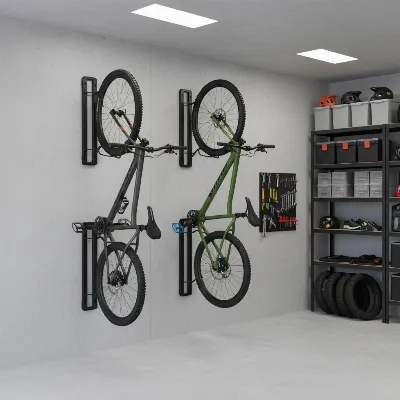 A clean, organized garage wall featuring multiple mountain bikes stored vertically on space-saving wall mounts. The bikes are staggered slightly to prevent handlebar interference.
Conclusion
Choosing the best vertical bike rack for your mountain bike boils down to a clear understanding of your individual needs for storage, transport, and space optimization. From the rugged, multi-bike capacity of vertical hitch racks by Alta Racks and VelociRAX, perfect for shuttling to remote trailheads, to the ingenious space-saving wall mounts from Steadyrack for home and garage organization, the options are diverse and highly specialized. Freestanding and ceiling-mounted racks further round out the choices, offering flexibility for various environments.
By carefully considering factors like durability, weight capacity, bike compatibility (especially tire width and fenders), and ease of use, you can confidently select a vertical bike rack that not only protects your valuable mountain bike but also enhances your overall riding experience. Whether you’re reclaiming precious garage space or embarking on an epic road trip, a well-chosen vertical bike rack is an investment in convenience and peace of mind. Which vertical rack will revolutionize your mountain biking life this year?
Frequently Asked Questions
Are vertical bike racks safe for carbon mountain bike frames?
Yes, most modern vertical bike racks, especially those designed for mountain bikes, secure the bike by the wheels only, avoiding any direct contact with the carbon frame. This design minimizes stress points and prevents scratches or damage, making them a very safe option for delicate carbon frames.
Can vertical hitch racks be used for e-mountain bikes?
Absolutely. Many vertical hitch racks, such as specific models from Alta Racks, are engineered with higher weight capacities and reinforced designs to safely accommodate the heavier weight of e-mountain bikes. Always check the rack’s per-bike weight limit and total capacity to ensure it’s suitable for your e-MTB.
Do vertical wall mounts save significant space in a small apartment?
Vertical wall mounts can drastically save space in a small apartment by converting horizontal floor space into vertical storage. Racks with swivel features, like those from Steadyrack, allow the bike to pivot closer to the wall, further reducing its intrusion into your living area and making tight spaces more functional.
What should I look for in a vertical bike rack for fat bikes?
For fat bikes, the critical factor is tire width compatibility. Look for vertical racks specifically designed for “fat” tires, which typically accommodate widths up to 4.5 or 5 inches. Brands like Steadyrack offer dedicated Fat Rack models, ensuring a secure and proper fit for your wider tires.
Is it difficult to load a mountain bike onto a vertical rack?
Loading difficulty varies by rack type. Vertical hitch racks often feature roll-in designs or minimal lifting, making them relatively easy. Wall and ceiling mounts typically require lifting the bike into position, which might be more challenging for heavier mountain bikes or individuals with mobility concerns.

I appreciate the focus on vertical racks for mountain bikes, especially for shuttle days. I picked up a budget-friendly option, and while it gets the job done, loading the bikes can be a bit awkward sometimes. I wish it had a slightly better mechanism for securing the front wheels, but for the price, it’s okay.
I recently got the Thule ReVert vertical hitch rack mentioned here, and it’s been a game-changer for our family’s mountain biking trips. We can easily fit all six bikes without any issues, and the ground clearance is fantastic for those bumpy forest roads. It feels super secure, even on longer drives.
I’ve been looking for a better way to store my mountain bike in my small apartment, and the idea of a vertical rack for garage solutions really resonated. I ended up getting a wall-mounted one that keeps my bike out of the way and looks pretty sleek. It’s so much better than tripping over it all the time!
Finally, a rack that actually makes sense for transporting multiple mountain bikes! The space efficiency of these vertical racks is incredible. I used to dread trying to fit everything on our old horizontal rack, but now it’s a breeze. Definitely worth the investment for anyone serious about hitting the trails.